
Books as a Silent Friend: What Reading Really Gives You

Ever opened a book on a worn-out evening, just to stop thinking for a while, and felt your shoulders drop after ten pages? Plenty of us have. It is why people talk about a book as a silent friend: it has no opinion about your day, and it won’t sulk if you leave it on the bedside table for three weeks. It’s a lovely image, but it deserves a closer look. Here is what it says about reading, what research backs up (and where it hedges), and how to bring a book back into your life without any pressure.
Key takeaways
- A book can be a judgement-free refuge, but it doesn’t replace human company.
- A large US study links reading books with longer survival: that’s a correlation, not proof.
- The idea that fiction makes us more empathetic is contested: replications give mixed results.
- You are allowed to skip pages, reread or give up on a book.
Why a book becomes a silent friend
A book has one rare quality: it is there for you without asking for energy back. No message to answer quickly, no tone to decode, no plans to organise. You open it when you like, close it when you like, and it waits on the same page.
That freedom explains a lot of why reading soothes. It gives you a space where nobody is watching and you can feel things without explaining yourself. A character who doubts, fails and gets back up: sometimes you recognise yourself in them more than in the well-meant advice of people around you.

A quick aside on a quote that does the rounds: “A book is a silent friend”, credited to Ernest Hemingway. We couldn’t trace its source, so we won’t present it as fact. That matters: the Hemingway Society checked 22 candidate quotes for its website and could attribute only 11 to him. Before sharing a famous line, look for where it comes from. If you can’t find it, keep the idea and leave the author out of it.
What research says about reading (without overselling it)
You often hear that “reading is good for your brain”, with no hint of where that comes from. Here are two findings we read closely, with their limits.
Do people who read books live longer?
In 2016, Avni Bavishi, Martin Slade and Becca Levy (Yale) followed 3,635 American adults for up to 12 years. After adjusting for age, sex, education, health and depression, people who read books had a risk of death about 20% lower than those who didn’t. The benefit was stronger for books than for newspapers or magazines.
Please don’t turn that into a promise. It’s an observational study from a single country: it shows a link, not that books “cause” a longer life. The authors also found that cognition explained part of the link. Take it as a hint that regular reading often goes hand in hand with an active, curious life.
Does fiction make us more empathetic?
In 2013, David Kidd and Emanuele Castano published a study in Science suggesting that a short stretch of literary fiction sharpens our ability to read other people’s emotions. The idea went viral. Since then, replication attempts have been mixed: according to the FORRT replication atlas, of six replications, three failed, two were mixed and one succeeded. Some work found no advantage for literary fiction over other kinds of reading.
What does it change for you? Nothing dramatic. You can read to step into other people’s shoes without expecting a measurable effect. Just be wary of articles claiming that “science has proved” reading opens your heart. The pleasure of reading is reason enough.

Your silent friend owes you nothing, and you owe it nothing
Here’s the trap in the pretty picture: turning reading into one more obligation. “I should read more”, “I never finished that novel”, “I don’t read enough classics”. Your silent friend never asked for any of that.
Daniel Pennac put it nicely in the French essay Comme un roman (Gallimard, 1992), which sets out the “inalienable rights of the reader”. They include the right not to read, to skip pages, to not finish a book, to reread, to read anywhere and to read aloud. Give yourself those permissions and reading goes back to being a pleasure, not a chore.
Mini-exercise (3 minutes): take the book you feel guilty about not finishing. Pick one of these rights, say the right to give up, and jot down in a sentence why it suits you. Then decide: reopen it without pressure, take it back to the library, or pass it on. Whichever you choose, you’ve made a decision, and that was the point.
Easing a book back into your life
If you’ve lost the habit, don’t aim for a book a week. Aim for a tiny way in. Here are three ways to restart, to pick from depending on your mood:
- Ten pages, no more: at a moment that already exists (morning tea, commute, just before bed).
- The visible book: leave it where your phone usually sits, and open it before you scroll.
- A book you already love: rereading is a genuine right, and often the gentlest way back in.
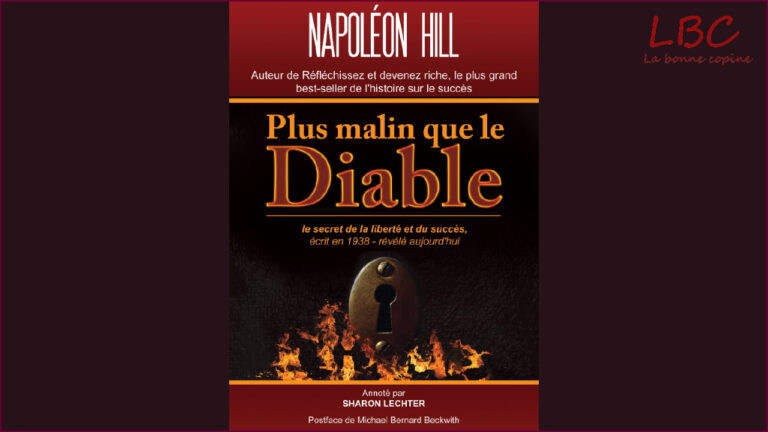
And if you’re wondering what to read, rather than hunting for the “right” book, start from what you fancy right now: a story that sweeps you away, an idea that shakes you up, a voice that sounds like yours. Our guide on deep reading in a distracted world helps you read at your own pace, and our piece on travelling through international literature has ideas for escaping from the sofa. If you enjoy non-fiction, have a look at personal development books too.

When a book isn’t enough
A book can keep you company, but it can’t answer when things go badly. If you’re retreating into reading because you feel very lonely, you’ve lost interest in seeing people, or your thoughts have been dark for several weeks, talk to someone you trust, your GP or a psychologist. Asking for help isn’t failing: it’s looking after yourself. If you are in acute distress or in danger, contact your local emergency services straight away.
So, which book is waiting on your bedside table?
No grand plan needed: pick the book you fancy tonight, open it on a single page and see what happens. Your silent friend is patient, and that’s its great strength. So which one do you feel like going back to this week?
Sources consulted on 28/10/2026: Hemingway Society, “Hemingway Didn’t Say That” (5 January 2021); Bavishi, Slade and Levy (2016), “A chapter a day: Association of book reading with longevity”, Social Science & Medicine, vol. 164, pp. 44-48 (abstract); Kidd and Castano (2013), “Reading Literary Fiction Improves Theory of Mind”, Science, vol. 342, and the FORRT Replication Atlas; Daniel Pennac, Comme un roman, Gallimard, 1992 (catalogue description).