The Philosophy of Family Love: From Hegel to Modern Perspectives

Family love shapes who we become deeply. In a world where individualism often takes center stage, family love emerges as a quiet yet powerful force that binds us across generations, inviting us to look beyond ourselves and consider what truly ties us together.
“Family love is not a feeling, but a form of commitment that pushes us beyond selfishness toward the other.”
Emmanuel Kant
In a world where individualism takes up more and more space, family love appears as a silent form of resistance. But what is family love truly? A simple feeling or a deep commitment to the other, according to Hegel and other philosophers who have explored the complexity of this bond. Throughout history, varied conceptions of family love have shaped our relationships. In this article, discover how Hegel’s thought, ancient Greek traditions, and modern philosophy illuminate today’s family ties, and why, in the end, family love could be one of life’s greatest challenges and blessings.
Family love is often regarded as one of the fundamental pillars of human life. It is both a deep bond, a source of support, and a central element of our personal and collective development. Yet family love is complex and manifests in diverse forms, each with its own dynamics and meaning. Across the ages, many philosophers have examined this notion, offering perspectives ranging from the ancient Greeks to modern thinkers. This article offers a philosophical reflection on the many facets of family love, examining the teachings of iconic figures like Hegel, as well as the ancient concepts of storge, philia, and agapè.
Philosophical Roots of Family Love
Hegel and ethical unity within the family
Hegel’s philosophy offers a unique perspective on family love. For him, the family is not merely a group of individuals linked by blood; it represents a fundamental ethical unity in which each member is integrated into a whole. In this framework, the individual surrenders a portion of independence to join a broader family project aimed at embodying a shared, lived ethic. Family love, in Hegel’s view, is understood as an ethic lived through feeling, a mutual recognition that transcends mere biological ties.
Love Types According to the Ancient Greeks
The ancient Greeks also contributed to our understanding of love by distinguishing several types of affection. Storge, for example, refers to the natural, instinctive love that binds parents and their children. This love, often tied to memories and deep emotional bonds, is seen as a simple, fundamental attachment.
Alongside storge lies the notion of philia, which denotes friendly, respectful love grounded in loyalty, trust, and genuine companionship. Within the family, philia shows up in relationships between siblings or adult family members who share common values and mutual respect.
Finally, family love can also approach agapè, a self‑disinterested love that goes beyond personal relations and is more universal. This type of love refers to a feeling of benevolence, compassion, and generosity found in relationships where each member seeks above all the other’s well‑being, regardless of personal desires.
Different Forms of Family Love
Parental love (sacrificial)
One of the most striking forms of family love is parental love. It is characterized by total availability and sometimes a personal sacrifice for the children’s well‑being. Parents, through their roles as nurturers and protectors, embody this love that often exceeds the limits of individual selfishness.
Ethical philosophy invites us to reflect on the question of sacrifice within parental love. How far can a parent go to guarantee a child’s happiness? Modern philosophers such as Emmanuel Levinas stress that this love is both an ethical response and a radical devotion, where the individual gives without expecting anything in return.
Sibling love (unity and solidarity)
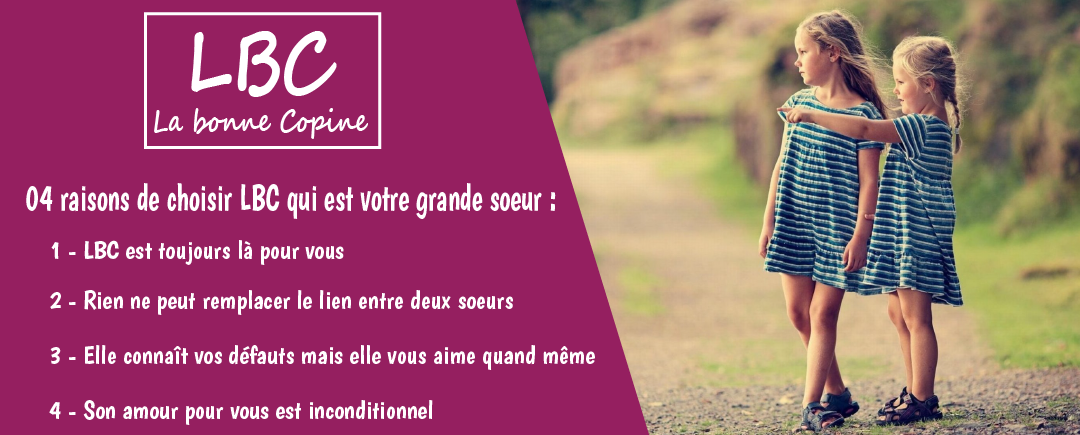
Sibling relationships also testify to a specific form of family love. Sibling love feeds on a deep solidarity that transcends natural conflicts or rivalries. This love is marked by a feeling of sharing and a shared memory, a sentiment that strengthens over time through shared experiences.
From a philosophical standpoint, the sibling relationship embodies unity in diversity. Philosophers emphasize that this bond, far from being merely biological, is built around shared memories, moments lived together, and a solidarity in the face of difficulties. Sibling love thus becomes a pillar supporting each individual’s identity construction within the family group.
Intergenerational love
Intergenerational love plays a crucial role in transmitting values and family traditions. It is the love that appears between different generations: grandparents to grandchildren, parents to children. This intergenerational link is a carrier of wisdom and collective memory, bearing deep meanings about human nature and family history.
From a philosophical perspective, this love serves as a means to transmit universal values and to forge a collective identity. Love between generations is an act of continuity, where elders offer the young a form of guidance, and where the youth pass on a fresh vision of the world, often more dynamic and in tune with social change.
Family Love in a Universal Perspective

Agape: universal love applied to the family
According to Christian tradition, agapè is a disinterested and unconditional love. This love surpasses simple family ties to extend to all of humanity. Applied to the family, it embodies the idea that love among family members should not be ruled by personal interest, but by a concern for the other’s well‑being, without expecting anything in return. Divine or universal love, as it is sometimes called, expresses itself in the ability to love without conditions, transcending the conflicts and tensions that can exist even within families.
The Tug‑of‑War Between Individuality and Family Unity
In today’s world, family love faces new challenges. The tensions between individuality and the need for family unity are increasingly noticeable, especially in modern societies where personal aspirations sometimes clash with family obligations. Family members often try to reconcile their personal desires with their role in the family unit, which can create tension but also opportunities to reinvent the forms of family love. Explore does family still hold the same role today to understand how these dynamics are evolving.
Contemporary Reflections on Family Love
Social transformations over the past decades have profoundly altered family structures. Blended families, geographical distance, and new social dynamics sometimes complicate how family bonds are maintained. In this context, contemporary philosophy urges us to rethink family love as a fluid phenomenon, capable of adapting and reinventing itself. Far from being a rigid structure, family love becomes a space for listening, understanding, and new forms of sharing. Practicing ethical communication in family life can help navigate these complexities with greater clarity.
Memories, family rituals, and shared moments play a fundamental role in preserving these ties. They help maintain family cohesion amid the challenges of the modern world.
Conclusion
Family love is far more than a simple biological link; it is an essential ethical and emotional force in human life. Whether through Hegel’s philosophical lens, the reflections of the ancient Greeks, or today’s challenges, it is clear that family love is a complex concept that continually evolves.
Each of us can reflect on our own family experience and nurture this love in all its forms. Recognizing the importance of family love means understanding that it is a source of stability, support, and happiness. It is also an invitation to see the family not merely as an institution, but as a space for personal and collective flourishing. Learn more about family and the quest for happiness to deepen this reflection.