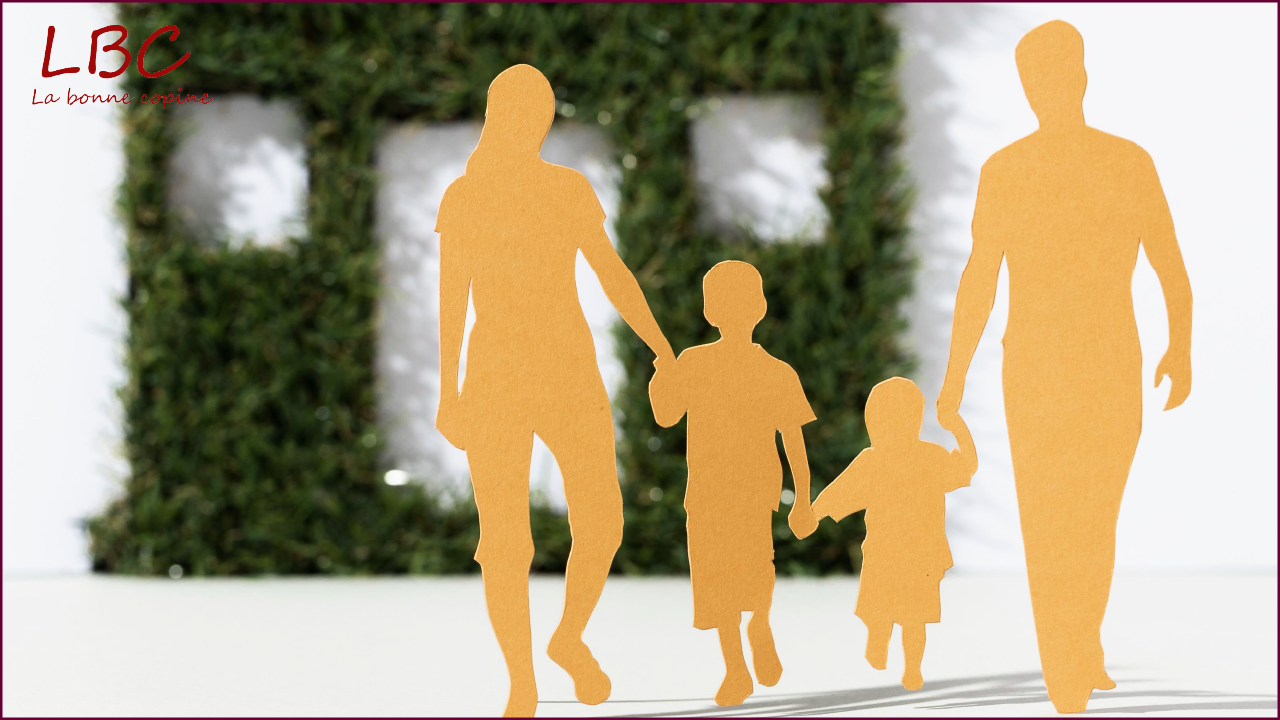
Does Family Still Hold the Same Role Today?

“Family is the nucleus of civilization.”
Will Durant
The modern family defies a fixed shape.
It is a fluid reality at the crossroads of nature and culture, constantly reshaped by social, economic, and technological tides while remaining a cornerstone of human societies.
Why the Modern Family Is the Heartbeat of Today’s Society
1. A Space for Transmission and Socialization
Since antiquity, the family has been seen as the cornerstone of society, family and the quest for happiness. According to Hegel, it is a place of moral development where individuals learn core values before entering society. Durkheim reinforces this idea, arguing that the family plays a key role in primary socialization, instilling norms and reference points necessary for adult integration.
Transmission goes beyond morals; it also encompasses culture, traditions, and heritage. In this way, the family ensures intergenerational continuity and promotes social cohesion.
2. A Secure and Structuring Framework for the Individual
From a psychological standpoint, Freud views the family as a fundamental psychic structure. It is within this unit that individuals develop their identity, first emotional bonds, and emotional balance. The parent‑child relationship plays a central role in personality formation, shaping future behaviors.
Modern sociologists and psychologists also highlight the family’s importance in managing emotions and providing support during life’s trials. Whether facing economic crises, breakup trauma warning signs, or personal transitions, the family often remains a vital refuge.
How Social Shifts Are Redefining the Family
1. The Evolution of Family Models
Over the centuries, the family has undergone numerous metamorphoses. While the traditional nuclear model (father, mother, children) long dominated, other configurations have emerged:
- Single‑parent families, on the rise, often linked to divorce or solo parenting choices.
- Blended families, born from new unions and redefining the roles of parents and children.
- Same‑sex parent families, challenging heteronormative norms and raising questions about equal rights.
- Expanded parenting models, such as co‑parenting or social parenting, reflecting a more flexible and diverse approach to family life.
These new family forms demonstrate that the family is not a rigid concept but a dynamic reality that adapts to societal changes.
2. Economic and Technological Influences on the Family
The rise of women’s work, job precarity, and shifting economic conditions have upended family organization. Gone is the model where the father alone brings home the paycheck; today’s families juggle professional responsibilities and parenting duties.
Meanwhile, digital tools and new technologies also reshape family interactions. Screens, social media, and remote communication have redefined household relationships, with sometimes ambiguous effects:
- Ease of communication despite distance.
- Risk of isolation and reduced direct exchanges.
- Increased influence of media and external models on family values and behaviors.
These transformations raise questions about the family’s role in a world where individualism and social mobility are growing.
Is the Family a Breeding Ground for Inequality?
1. The Transmission of Privileges and Disadvantages
If the family is a place of protection and value transmission, it is also often criticized for its role in reproducing social inequalities. Engels, in his critique of capitalism, sees the family as an instrument for perpetuating economic privilege, where wealth and social status are passed down generation after generation, thus maintaining class gaps.
Similarly, feminist philosopher Okin argues that the family is also a space where gender inequalities persist. The uneven division of domestic chores, the unequal sharing of parenting responsibilities, and deep‑rooted stereotypes in family upbringing sustain imbalances between men and women.
2. Challenging Traditional Structures
Facing these critiques, reforms and movements arise to promote a more egalitarian and inclusive family, building an authentic women’s network:
- Recognition of shared parental leave, allowing a fairer distribution of responsibilities between parents.
- Promotion of gender‑neutral education, aiming to break stereotypes from an early age.
- Development of policies that foster a better distribution of wealth and opportunities among families.
These developments show that, although foundational, the family is not exempt from criticism and must be rethought through a lens of social justice.
What Lies Ahead for the Family?
The modern family is far from a fixed concept; it is a fluid reality standing at the crossroads of nature and culture. It has continually reshaped itself amid social, economic, and technological shifts while remaining a cornerstone of human societies.
Depending on the lens, it is seen as a haven of love and transmission (Hegel, Durkheim), where affective bonds grow and individuals are socialized; as a fundamental psychic structure (Freud), central to identity formation and learning social norms; and as a site where inequalities are reproduced (Engels, Okin), allowing economic and gender hierarchies to pass from one generation to the next.
Today, the modern family continues to evolve amid social and technological upheavals: family models diversify, parental roles are redefined, and digital influence seeps into everyday relationships.
Amid these changes, a fundamental debate arises: should we preserve the family as a stable institution safeguarding values and social cohesion, or should we accompany its transformation, embracing ever more diverse forms and adapting public policies to meet new family challenges?
Whatever path we choose, one thing is clear: the modern family, in all its forms, remains a place of attachment, identity building, and cultural transmission; its flexibility and adaptability will be the keys to its endurance in tomorrow’s world.