Beyond Stereotypes: Finding a New Balance in Age‑Gap Relationships

Beyond prejudice, the search for a fresh equilibrium
Article LBC — Sociological & Wellness Angle · Step 4 completed · April 27 2026 🇫🇷
For too long we’ve crammed these couples into two tidy boxes: the “sugar daddy” and the “cougar.” Two labels, two caricatures, and behind them thousands of real, complex unions—often healthier than the average. These partnerships have chosen love outside the usual demographic playbook.
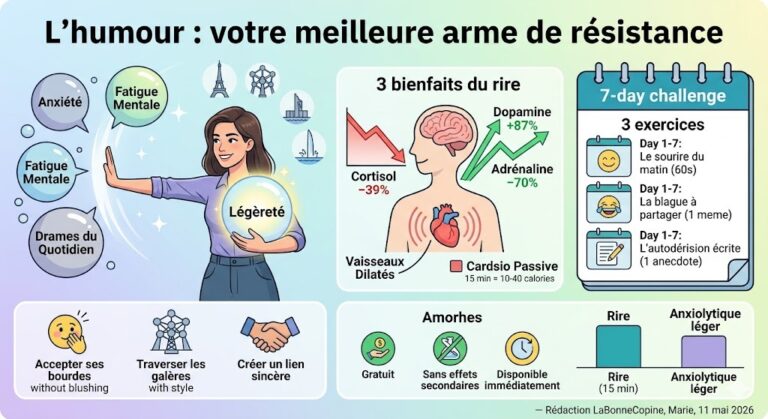
Because an age gap, in itself, tells you nothing. laughter for stress relief What matters is the dynamic between two people—their values, how they weather crises, and their ability to grow together even when their generational reference points diverge.
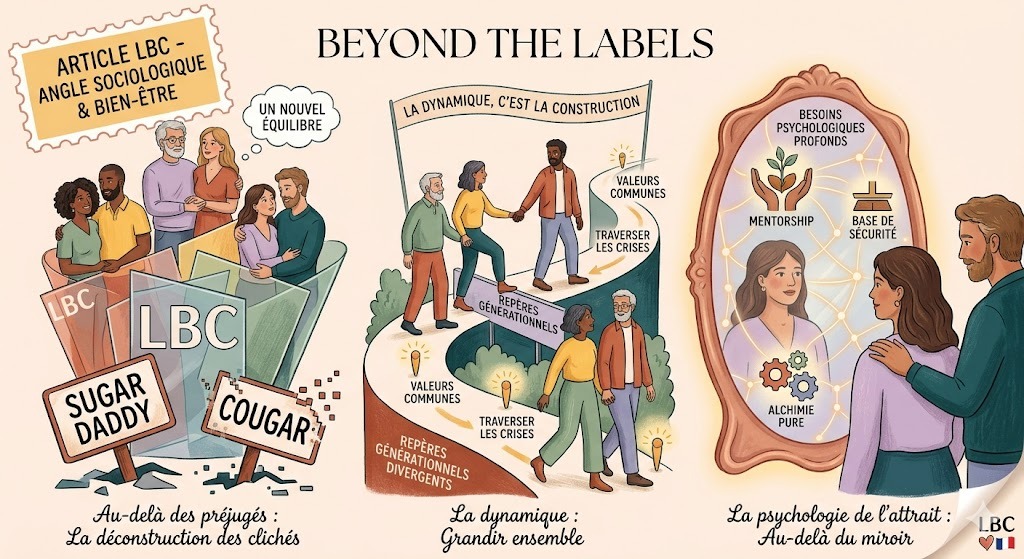
In this guide we pull apart the clichés, confront the challenges head‑on, and uncover what actually makes these age‑gap relationships last. Longevity isn’t random—it’s built.
The Psychology Behind the Attraction
What stereotypes miss is the real engine of these unions. It’s rarely about status, money, or a chase for youth. It’s about deep psychological needs, often articulated more clearly than in same‑generation couples.
What the Younger Partner Really Seeks
- Emotional stability: a partner who has survived ego‑crises, career upheavals, and loss—a “secure base” that only time can construct.
- Affectionate mentorship: not to be guided, but to be understood by someone who’s already weathered similar storms. Reassuring without being patronizing.
- Maturity without heaviness: experience without bitterness. The couples that click find this delicate balance.
What the Older Partner Really Seeks
- Mental flexibility: a younger companion who keeps them tuned into cultural, technological, and social shifts—a guard against retreat.
- Emotional renewal: not a “second youth” as the press would have it, but a fresh way to see themselves through new eyes, free of shared‑history filters.
- Pure chemistry: often, it’s just that. They recognized each other. Age was never the topic.
| Profile | What the younger partner brings | What the older partner brings |
| The Explorer & The Sage | Vitality, fresh cultural references, tech fluency, a new outlook | Emotional steadiness, perspective, crisis experience, secure‑attachment base |
| The Mature Woman | Financial independence, a relationship chosen for pure chemistry | Earned confidence, autonomy, freedom from the “find a protector” pressure |
| The 70/30 Ideal | 70 % shared projects: values, travel, passions | 30 % generation‑specific space: friends, biological rhythm, hobbies |
Managing the “Phase Gap” – The Real Issue
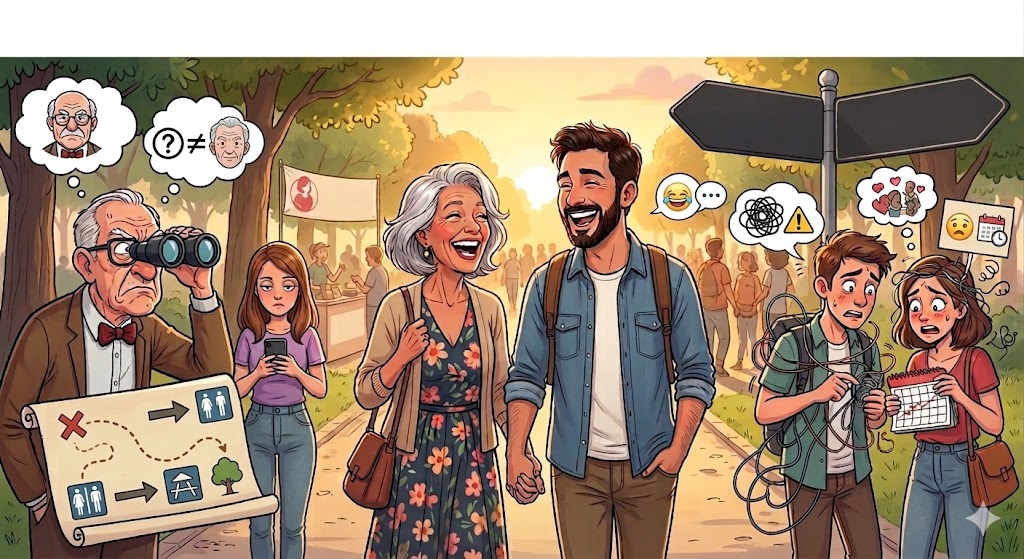
The biggest hurdle for an age‑gap relationship isn’t the years apart. It’s the synchrony of life projects. Two people can love deeply and later find their inner agendas no longer speaking the same language.
Here are the four most common friction points—and how to smooth them.
| Challenge | What’s really happening | LBC’s tip |
| Phase gap | One partner is entering full‑time work, the other is eyeing retirement. Energy, evening plans, and stamina diverge. | Map your “life zones” together for the next five years. Not to micromanage, but to avoid surprises. |
| Children | A major biological and social flashpoint, especially when the woman is older. | Discuss early, honestly, without disguising the truth for love’s sake. It won’t resolve itself later. |
| Social gaze | Often harsher when the woman leads. Words like “cougar” or “young stud” capture collective discomfort. | Co‑create a solid couple narrative. Not to convince strangers, but to keep external opinions from defining you. |
| Social circles | Two groups with opposite concerns: diapers vs. retirement, gaming nights vs. quiet dinners. | Build a “third circle” built on shared passions, not demographics. |
🔑 The 70/30 secret
Durable intergenerational couples almost always land on a similar formula: 70 % joint projects (values, travel, passions, life plans) and 30 % space for generation‑specific pursuits (friends, biological rhythm, hobbies). It isn’t a compromise—it’s a relational architecture.
When the Woman Leads: A Unique Lens
This configuration still bears the heaviest social stigma. It echoes a patriarchal legacy that once tied a woman’s worth to fertility and youth. In 2026 the model persists, but it’s eroding.
Why these couples often feel the most egalitarian
- The established, self‑assured woman isn’t hunting a financial protector; she chooses out of desire.
- The younger man isn’t seeking an authority figure; he chooses out of admiration and chemistry.
- Power dynamics tend to balance because they escape traditional hierarchy scripts.
The real cost of stigma
Looks, jokes, insinuations add up. They can eat away at a partnership that hasn’t built its own story. That shared narrative answers external questions internally—it’s not for anyone else, it simply grounds the couple in what they know is true.
In societies that value transmission over hierarchy—like the matriarchal models described by Bachofen or explored in feminist speculative fiction—age is seen as a badge of wisdom. These unions become not only natural but celebrated. They hold up a useful mirror for questioning our own norms.
Body, Rhythm & Health – Taming the Differences
Approach this with kindness and no taboo: biological differences exist. Energy levels, physical effort, and recovery needs diverge, and the gap widens over time.
High‑connection, low‑intensity activities
- Long walks: a pace that suits all, with conversation that unfolds naturally.
- Couples yoga or meditation: a shared space that demands no athletic prowess.
- Cooking, gardening, DIY projects: joint creations that anchor you in the present.
Key idea: Don’t erase vitality differences—find territories where they simply don’t appear. They’re always there, you just have to choose the right playground.
Since you’re already thinking about “high‑connection, low‑intensity” pastimes (walks, cooking, gardening), here’s a handy tip: mindfulness techniques for instant calm
💡 Smart little reflex: To outfit your shared garden or snag comfortable walking shoes without breaking the bank, swing by the eBoons galaxy (eboons.be/eboons.ch). It’s LBC’s shortcut to quality moments together, plus a bit of cashback.
The Four Keys to Longevity in Age‑Gap Relationships
An intergenerational partnership isn’t inherently more fragile. It simply faces specific pressures—social, biological, temporal. Naming them neutralizes their impact, or at least stops them from catching you off guard.
1. Align Core Values
Not music taste or pop references—deep values. How you treat the vulnerable, what you do when things go south, what a “successful life” looks like. That’s the foundation.
2. Transparent Talk About Future Expectations
Kids, retirement, mobility, long‑term health—bring these to the table early. Not to lock everything down, but to avoid discovering incompatibility when it’s too late to adjust painlessly.
3. Independence From Outside Opinions
Family, friends, colleagues—all have advice. Lasting couples learn to listen without surrendering. It’s not arrogance—it’s relational clarity.
4. Build a Shared Circle
Having two separate friend groups is normal. The solution isn’t forced merging; it’s to create a third circle building a lasting support circle based on mutual passions—a book club, a nonprofit, themed travel. That becomes the couple’s common ground.
Bottom Line: Age Gaps as a Wealth to Nurture
If we return to matriarchal societies—where transmission is a cardinal virtue rather than an oddity—intergenerational love takes on a whole new meaning. The age gap stops being a problem to manage; it becomes a living conduit for transmission: experience to vitality, perspective to momentum.
What these couples truly teach us is that relationship length doesn’t hinge on birthdates. It hinges on the gap between what you want to build and what you’re willing to traverse together. Age says nothing about that.
The real question isn’t, “What do others think of your age gap?” It’s, “What are you building together that you couldn’t build otherwise?” If you have an answer, you have your compass.
And you—what is your partnership building?
Whether you’re living an age‑gap relationship, contemplating one, or simply observing from the outside—ask yourself this.
What these unions reveal is that the most durable loves are often the ones that have had to justify themselves at least once. Not to outsiders— but to themselves. And they survived that internal exam.
- 📖 Also read: Self‑determination — steering your own life
- 💬 Share your experience in the comments—often the most valuable testimonies are the quietest.
Article written by La Bonne Copine — Step 4 completed · April 27 2026 · France 🇫🇷
Sources: attachment theory (Bowlby), matriarchy (Bachofen), feminist speculative literature (Wintrebert). Anonymized field testimonies.