How to Read Food Labels: 7 Simple Techniques to Decode Any Packaging

Ever felt tricked by a ‘healthy’ label that hides sugar under 56 different names? Learning how to read food labels can stop the confusion and give you real power over what you eat.
“It’s not what we don’t know that puts us in danger; it’s what we’re certain of that just isn’t true.”
Michael Pollan, journalist and author specializing in food
You’ve scanned the label, compared nutrition facts, and picked the ‘low‑fat’ product. You think you made the right choice. Really? 76% of shoppers regularly misread food labels. The trap isn’t what you read—it’s what they hide. Sugars disguised under 56 different names. Portions deliberately understated. Nutrition claims that are technically legal but fundamentally misleading. The food industry spends millions to keep nutrition information a coded language. A code you can now crack. No nutrition degree needed. No hours spent. Just a few simple techniques that will transform your grocery shopping starting today.
You find yourself staring at the cereal aisle, phone in hand, desperately comparing two boxes that look identical. One proudly says ‘source of fiber’, the other ‘no added sugars’—but which do you choose? This daily confusion isn’t an accident. Food labels are deliberately designed to lure you while hiding the essentials. This week a client confessed she’d bought a ‘100% pure fruit juice’ for years that actually contained only 12% fruit. You’re not alone. Nutrition information looks like a secret code only initiates can decode. But the good news? In just seven minutes of reading, you’ll gain the keys to instantly decipher any label. No more wasted hours in the aisles. No more regret after discovering sketchy ingredients in your pantry. I’ll reveal the seven techniques I teach my clients to expose marketing traps and make healthy food choices that match your real needs. These methods have already helped over 500 women in our community transform their health and figure—without restrictive diets, just by knowing exactly what goes into their cart.
The secret language of food labels: why understanding them matters
How Labels Directly Affect Your Health and Well‑Being
Ever wonder why some products give you an energy spike while others leave you sluggish an hour later? The answer often lies in their composition. Food labels aren’t just legal requirements—they’re your window into what truly fuels your body.
Recent studies show that regular consumption of food additives like sulfites (E220‑E228) or nitrates (E249‑E252) can cause chronic headaches, digestive issues, or even inflammatory reactions. Yet these compounds often hide in products that seem harmless, such as ‘high‑quality’ cured meats or ‘premium’ wines.
Understanding labels also lets you tailor your diet to specific needs. Whether you want to cut sugar, boost protein, or avoid certain allergens, this skill is essential for hitting your health goals. To dive deeper into this connection, explore how food influences your mood and the nutrition choices that support mental well‑being.
Why Marketers Play with Words
Let’s be clear: a package’s main goal isn’t your well‑being—it’s selling the product. Manufacturers have built an entire arsenal of marketing tactics to make their goods more appealing.
One of the most common tactics is the use of misleading nutrition claims. A ‘0% fat’ yogurt can pack up to 15 g of sugar per pot—the equivalent of four sugar cubes! These ‘light’ products often compensate for missing fat with a hefty dose of sugar or additives to keep the taste.
The serving sizes shown on labels are another common trap. By listing unrealistic portions (who really eats an eighth of a pizza?), manufacturers can display flattering nutrition numbers that don’t match your actual intake.
How to Read Food Labels: 7 Simple Techniques That Work
1. Ingredient List: Your First Quality Clue
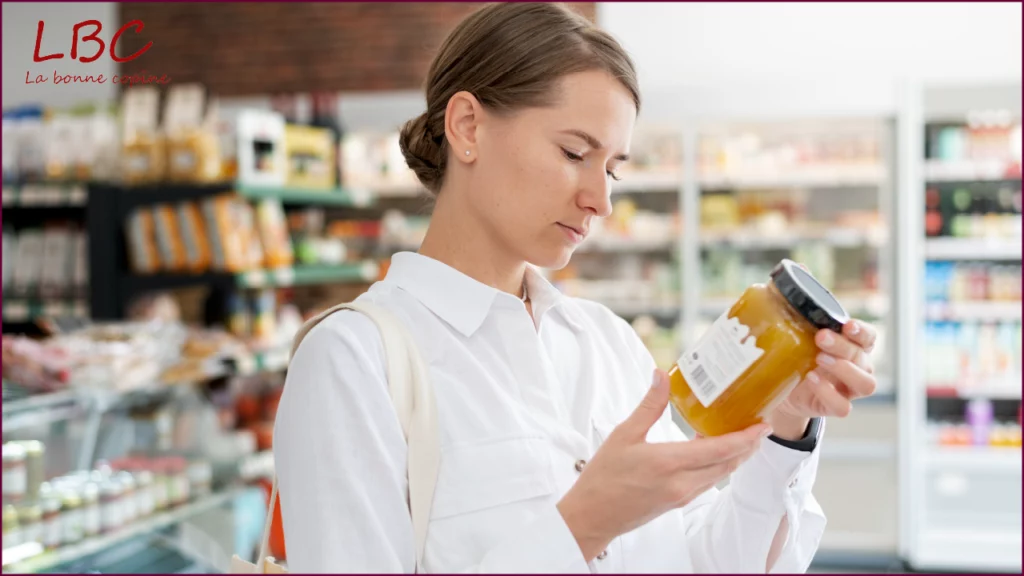
The golden rule for decoding a food label is to start with the ingredient list. Unlike marketing claims on the front of the pack, this list never lies.
Ingredients are always listed in descending order by weight. So the first ingredient makes up the bulk of the product. It’s a key quality clue: if the first ingredient in an ‘apple compote’ is sugar instead of apples, you already know what you’re getting.
A quality product usually contains few ingredients, all recognizable. You should be able to name each component without a chemistry dictionary. If the list looks like a scientific formula, it’s often a sign of ultra‑processed food.
Concrete example: Compare a traditional bread (flour, water, levain, salt) to an industrial sandwich loaf that can contain up to 15 ingredients, including emulsifiers, preservatives, and other additives.
2. Allergens: An Essential ID System
Even if you don’t have food allergies, understanding allergen labeling gives you valuable insight into a product’s composition.
In France and Switzerland, 14 major allergens must be highlighted on labels (bold, underlined, or a different color):
- Gluten‑containing cereals
- Crustaceans
- Eggs
- Fish
- Peanuts
- Soy
- Milk
- Tree nuts
- Celery
- Mustard
- Sesame seeds
- Sulfur dioxide and sulfites
- Lupin
- Mollusks
This highlighting lets you quickly spot ingredients you may want to limit, even if you’re not allergic. For example, if you’re trying to cut dairy, spotting milk in bold saves you precious time.
3. Nutrition Facts: Beyond Calories
The nutrition facts panel often looks complex, but you only need to know where to focus to pull out valuable insights.
Nutrition values are always given per 100 g or 100 ml, making product comparison easy. Some labels also show per‑serving values, but watch out for unrealistic serving sizes!
Focus on these five key indicators:
- Sugars: WHO advises no more than 25 g of added sugar per day. A product with over 10 g of sugar per 100 g is considered sugary.
- Saturated fat: Should be under 10% of your daily energy intake. Watch out for products with more than 5 g saturated fat per 100 g.
- Salt: Recommended max is 5 g per day. A product is salty if it exceeds 1.5 g salt per 100 g.
- Fiber: Often overlooked, it’s essential for digestion and satiety. Aim for around 25 g per day.
- Protein: Especially important if you’re vegetarian or exercise regularly.
4. Food Additives: Decoding the E‑Codes
Additives, often labeled with E codes, aren’t all harmful, but some deserve special attention.
Here are a few categories to know:
- E100‑E199: Colorants (some, like E102, E104, E110, may cause hyperactivity in children)
- E200‑E299: Preservatives (sulfites E220‑E228 can trigger reactions in sensitive individuals)
- E300‑E399: Antioxidants (generally harmless)
- E400‑E499: Emulsifiers and stabilizers
- E500‑E599: Acidity regulators
- E600‑E699: Flavor enhancers (e.g., E621 or monosodium glutamate)
- E900‑E999: Miscellaneous (coating agents, sweeteners)
A practical tip: Download an app like ‘Food Additives’ or ‘E‑Numbers’ that lets you scan E codes and instantly get safety info.
5. Nutrition & Health Claims: Sorting Fact from Fiction
Claims like ‘high in’, ‘source of’, ‘free from’, and ‘reduced’ are tightly regulated, yet they can still mislead.
- ‘No added sugars’ does NOT mean ‘sugar‑free’! The product may still contain naturally occurring sugars, as in fruit juices.
- ‘Reduced fat’ means the product has at least 30% less fat than a similar product, but it can still be high in fat overall.
- ‘Source of fiber’ indicates the product contains at least 3 g of fiber per 100 g.
- ‘High in protein’ means the product gets at least 20% of its energy from protein.
To avoid being fooled, always compare these claims with the nutrition facts and ingredient list.
6. Quality Logos & Labels: Which Are Worth It?
With so many labels popping up, it’s easy to feel lost. Here are the main ones to know:
- AB label (Organic Agriculture): Guarantees at least 95% of ingredients come from organic farming.
- Label Rouge: Certifies superior quality compared to similar products.
- PDO (Protected Designation of Origin): Guarantees the product is made in a specific geographical area using recognized expertise.
- Nutri‑Score: This A‑to‑E rating scores the product’s overall nutritional quality.
In Switzerland, you’ll also find specific labels such as:
- Swiss Bio Bud: Stricter than the European AB label.
- Swiss Guarantee: Ensures the product is made in Switzerland.
These labels can be helpful indicators, but they don’t replace a careful read of the label.
7. Expiration Dates: DLC vs DDM – Know the Difference
Expiration dates are among the most misunderstood parts of food labels, leading to massive food waste.
- Use‑by Date (DLC) shown as ‘consume by …’ applies to perishable items. Going past this date can pose a health risk.
- Best‑before Date (DDM) shown as ‘best before …’ means the product may lose some flavor or nutritional quality after that date, but it’s still safe to eat.
A yogurt can be eaten 2‑3 weeks after its DDM if stored properly. Likewise, dry pasta or rice can keep for years past their DDM.
Putting It Into Practice: How to Compare Products Fast
The 30‑Second Drill to Become a Label Pro
The good news? You don’t need to be a nutritionist to make smart choices. With practice, you can size up a product in under 30 seconds.
Here’s a simple four‑step method:
- Check the ingredient list: few ingredients, all recognizable? That’s a good sign.
- Verify sugar, salt, and saturated fat amounts per 100 g.
- Spot controversial additives (artificial colors, sweeteners, flavor enhancers).
- Compare with similar products to pick the best option.
Practical exercise: On your next shop, compare two similar items—say, two breakfast cereals. You’ll be amazed at the differences you spot!
Case Study: Fruit‑Flavored Yogurt vs Plain Yogurt + Fresh Fruit
Let’s look at a concrete example to show why reading labels matters:
An industrial strawberry yogurt can contain:
- Whole milk
- Sugar (often the 2nd ingredient!)
- Strawberries (only 3‑8%)
- Modified starch
- Flavors
- Colorant (E120 or carmine)
- Preservatives
Per 100 g, it typically delivers 15 g of sugar, most of which is added.
Alternative: plain yogurt with fresh strawberries
- Plain yogurt: milk, live cultures
- Fresh strawberries
- A drizzle of honey to sweeten, if desired
This alternative has less sugar, more real fruit, no additives, and often costs less!
Specific Pitfalls to Avoid on Food Labels
Hidden Sugars: 25+ Aliases That Mask Sugar
Sugar is one of the sneakiest ingredients because it hides behind many names. Here are a few:
- Glucose‑fructose syrup
- Dextrose
- Maltodextrin
- Cane or beet sugar
- Fruit juice concentrate
- Agave, maple, or rice syrup
- Honey
- Molasses
Tip: any ingredient ending in ‘‑ose’ is usually a sugar!
Manufacturers sometimes split sugar into several types so it doesn’t top the ingredient list. If you see multiple sugar forms in the same list, be wary!
Unrealistic Serving Sizes: How They Skew Your Perception
Another common trap is listing serving sizes far below what people actually eat.
For instance, some chip bags list nutrition facts for a 30 g portion (about 15 chips), yet most people easily eat two to three times that amount in one sitting.
Likewise, a 50 cl soda bottle is often labeled as two servings, though it’s usually drunk in one go.
To avoid this trap, always refer to the per‑100 g or per‑100 ml values, which enable objective product comparison.
False Health Claims: Marketing vs Reality
Packaging is stuffed with claims that straddle the line between information and marketing:
- ‘Natural’ has no strict legal definition and can be used on products containing additives.
- ‘Made with real fruit’ may mean only 1% real fruit.
- ‘Multigrain’ doesn’t mean ‘whole grain’—a product can contain several refined grains.
- ‘Cholesterol‑free’ on plant‑based products is meaningless, since plants naturally contain no cholesterol.
Take breakfast cereals, for example: some boxes boast added vitamins and minerals while packing up to 30% sugar. It’s like sprinkling vitamins on candy!
Tailoring Label Reading to Your Specific Needs
Special Diets: Vegetarian, Gluten‑Free, Lactose‑Free
If you follow a particular diet, labels become even more crucial.
For a vegetarian or vegan diet, watch for hidden animal‑derived ingredients such as:
- Gelatin (often in candies and desserts)
- Carmine (E120, a red dye from cochineal insects)
- Rennet (in some cheeses)
- L‑cysteine (E920, often animal‑derived)
For a gluten‑free diet, beware of statements like ‘may contain traces of gluten’ that signal cross‑contamination risk. Look for the ‘crossed‑grain’ logo, which guarantees suitability for the intolerant.
For a lactose‑free diet, watch for dairy derivatives such as whey, casein, or lactate.
Weight‑Loss Goals: What to Prioritize
If your goal is weight loss, focus on:
- The calorie density of the product (calories per 100 g)
- The amount of added sugars
- The quantity of saturated fat
- The presence of fiber (which promotes satiety)
Favor products with moderate calorie density, low added sugars, limited saturated fat, and good fiber.
For example, compare a traditional muesli (~350 kcal/100 g) with chocolate‑puffed cereals (often over 450 kcal/100 g)—the difference can significantly affect your daily calorie tally.
For Athletes: Macronutrient Focus
If you exercise regularly, your needs are specific:
- Protein: essential for muscle recovery (look for products with at least 15 g protein per 100 g).
- Complex carbs: for lasting energy (favor products rich in starch and fiber).
- Fat quality ratio: check the omega‑6 to omega‑3 ratio (ideally under 5:1).
Protein bars are a prime example where reading the label is crucial: some deliver a solid protein boost (15‑20 g per bar), while others are mostly sugar and offer barely 5 g of protein.
How to Make Label Reading a Daily Habit
Organize Your Shop with the Label Method
To save time on your shop while making informed choices, try this effective method:
- Make a list grouping items by aisle.
- Prioritize label‑free foods (fruits, veggies, fresh produce).
- For packaged goods, check the ones you buy regularly first—you’ll be shocked to discover what’s really in your usual staples!
- Build your own approved‑products list gradually after reading labels.
One LBC community member cut her grocery bill by 15% in three months just by comparing labels and dodging overpriced, misleadingly marketed products!
Take Action: The 7‑Day Label‑Reading Challenge
To turn this info into a habit, here’s a simple seven‑day challenge:
Day 1: Scan your pantry and evaluate the labels of five products you use regularly. Day 2: Compare three similar items while shopping (e.g., different yogurt brands). Day 3: Identify and swap a problematic product for a healthier alternative. Day 4: Check the labels of your usual snacks. Day 5: Compare standard products with their ‘light’ versions. Day 6: Learn to spot the five most controversial additives. Day 7: Share your findings with a friend and spread the label‑reading message.
This simple challenge will help you build a label‑reading reflex that soon becomes second nature. Pair it with mindful eating practices to fully reconnect with your body’s wisdom around food.
FAQ: Your Most Common Questions
Do Organic Products Always Have ‘Cleaner’ Labels?
Organic products guarantee no synthetic pesticides or GMOs, but they can still pack significant sugar, salt, or fat. An organic cake is still a cake!
Organic rules also allow certain additives, though far fewer (about 50 versus over 300 in conventional foods). These include sulfites, nitrites, and phosphates.
The rule stays the same: always check the labels, even for organic items.
How to Read Labels When Traveling Abroad
Labeling rules vary by country, but here are a few tips:
In Europe, rules are harmonized and similar to France and Switzerland.
In the United States, the format differs:
- Servings are often shown in ounces (oz) rather than grams
- Percentages are based on a 2,000‑calorie diet (‘Daily Value’)
- Added sugars are now separated from naturally occurring sugars
In Japan or South Korea, look for universal allergen symbols and use a translation app if needed.
A traveler’s tip: download an app like ‘Google Lens’ that can instantly translate labels you photograph.
Are Scanner Apps Reliable for Evaluating Products?
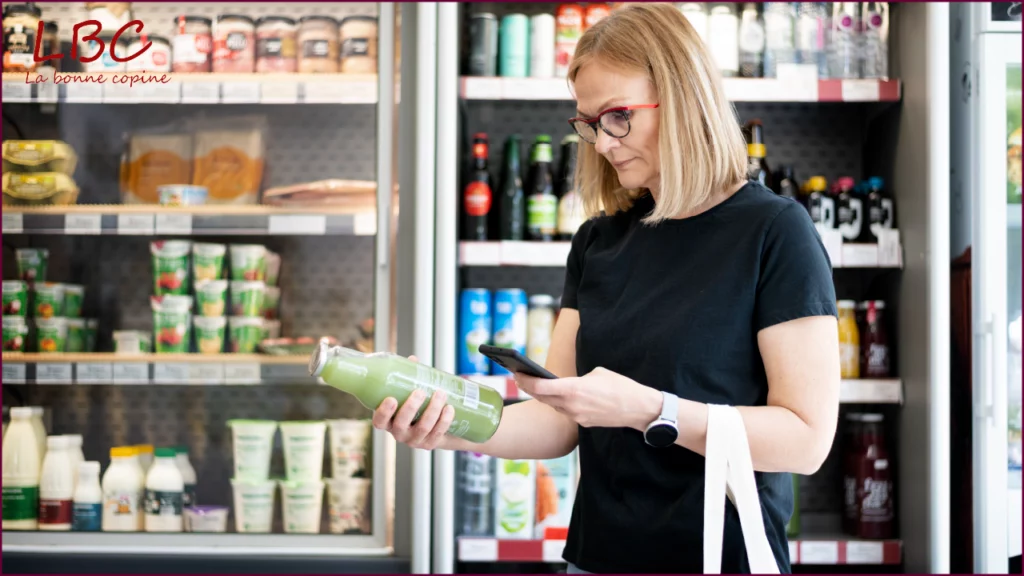
Apps like Yuka, Open Food Facts, or Siga can be handy decision aids, but they have limits:
- Quick and easy to use
- Give an instant evaluation
- Often suggest alternatives
- Their algorithms can be debatable (some over‑ or under‑weight certain criteria)
- Their database may be incomplete
- They don’t account for your specific needs
Use these apps as a first filter, but also build your own label‑reading skill to make truly personalized choices.
Conclusion: Toward More Conscious Consumption
Knowing how to read food labels is a life‑changing skill. It gives you the power to make informed choices that match your needs and values. As we’ve seen, it’s not about becoming obsessive or banning foods—it’s about understanding what you actually consume.
By applying the techniques we’ve covered—from scanning the ingredient list to comparing nutrition facts—you can gradually reshape your diet without drastic deprivation. It’s a sustainable approach that keeps you in charge of your food choices.
Next time you shop, take a few extra seconds to flip the product and read its label. That small habit can make a big difference for your health and well‑being.
Further Resources
If this topic interests you, here are some excellent resources to dig deeper:
- Food Additives: Danger by Corinne Gouget – a practical guide to spotting problematic additives
- The ‘Food Detective’ workshops by the French Nutrition Association, offering hands‑on sessions to learn label decoding
- The Open Food Facts app, created by volunteers, lets you scan products and access detailed data
- The ANSES website (French Agency for Food, Environmental and Occupational Health & Safety) offering reliable nutrition resources
More on the La Bonne Copine Blog
Loved this article? You might also enjoy:
- The 10 Toxic Ingredients Hiding in Your Kitchen Pantry
- How to Shop Like a Nutritionist: The Complete Guide
- A Balanced Weekly Menu: 7 Days of Healthy Meals Prepped in 2 Hours
- Special Diets: How to Adapt Your Eating Without the Hassle
Share your surprising label discoveries in the comments—the LBC community loves these insights that help us all move forward!