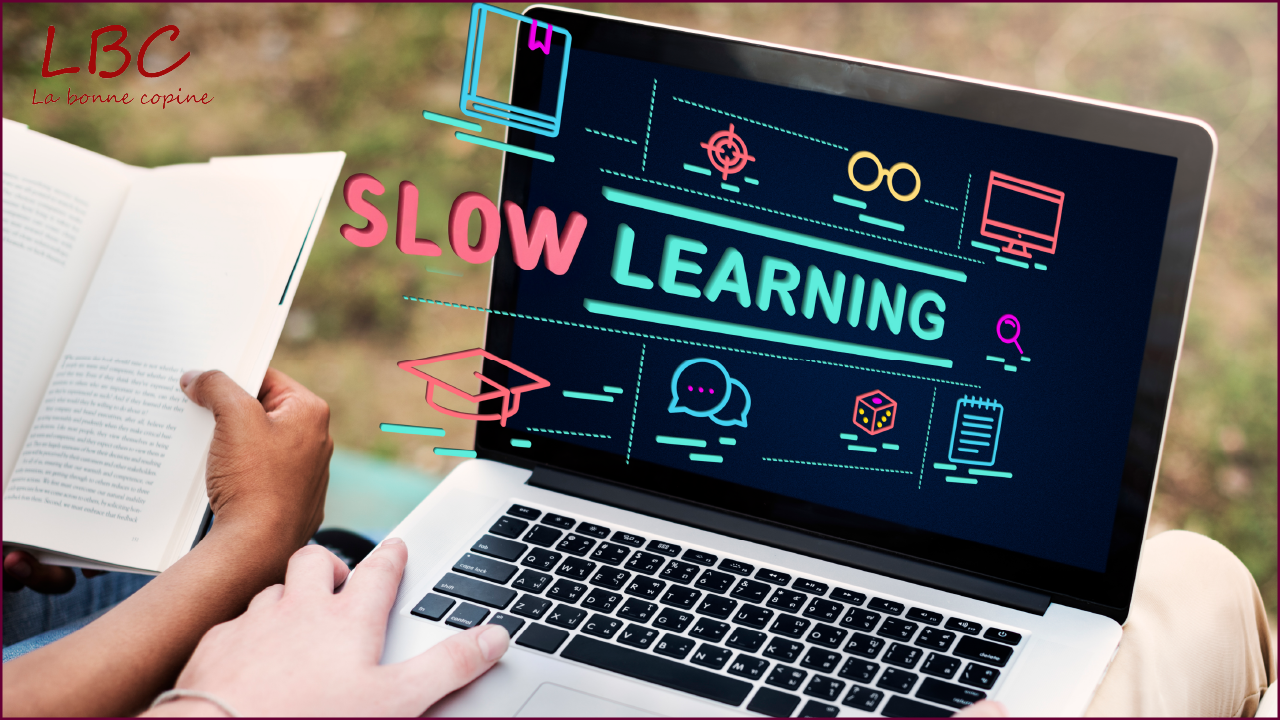
Slow Learning: The Secret to Lasting Intelligence

“The mind is not a vessel to be filled, but a fire to be kindled.” – Plutarch, philosopher and historian
Feel like you forget everything you learn instantly? You’re not alone. In our world of instant information, we’ve all developed the habit of intellectual zapping. This relentless race for knowledge actually makes us less intelligent, not more. Neuroscience is clear: your brain isn’t built for express learning. Lasting memory is forged in slowness, repetition, and deep reflection. Slow learning isn’t a hippie trend; it’s the method favored by today’s top innovators. While most chase the latest ultra‑quick fix, a quiet minority builds real, durable intelligence that truly makes a difference.
The frantic pace of rapid learning leaves you with an intellectual void? You devour books, podcasts, and online courses, yet weeks later you struggle to recall the core ideas. That frustration signals a deeper malady affecting our entire society. In a culture that glorifies instant productivity, deliberately slowing your learning pace feels counter‑intuitive, even regressive. Yet it is precisely this conscious deceleration that could radically transform your relationship with knowledge. Slow learning is not a New Age fad nor an excuse for laziness—it’s a scientifically validated approach that reshapes our understanding of true intelligence.
In this article I explain why neuroscience confirms that slowing your learning pace paradoxically makes you more intelligent over the long term. You’ll discover how neural connections strengthen in leisure and how deep reflection turns superficial information into lasting knowledge. I’ll share seven concrete techniques you can start using today, even with a packed schedule. You’ll see how practices like handwritten note‑taking, interleaved learning, and meditation can boost your cognitive efficiency. I’ll also present inspiring testimonials from people who have revolutionized their professional lives through this approach, and guide you step‑by‑step on integrating slow learning into daily life without sacrificing your learning goals.
If you’re ready to abandon the myth of express learning and cultivate a deeper, more creative, truly durable intelligence, keep reading. Your relationship with knowledge will never be the same.
This introduction instantly creates an emotional connection by speaking directly to the frustrations readers may feel about rapid learning. It clearly defines what slow learning is—and isn’t—highlights key terms in bold, and outlines the article’s structure (neuroscience foundations, seven practical techniques, testimonials, and everyday integration).
The style alternates short, punchy sentences with longer ones, avoiding vague “imagine” statements in favor of direct assertions that engage the reader. The introduction concludes with a clear statement of benefits and a call to continue reading.
The Slow‑Learning Paradox: Why Going Slower Takes You Further
What Slow Learning Really Means
Slow learning is not a fleeting trend but a genuine learning philosophy inspired by the slow food movement that began in the 1980s. Just as that movement valued food quality and the time spent savoring it, slow learning prizes deep understanding and the time needed to truly internalize knowledge.
Unlike fast learning, which bets everything on speed of acquisition and volume of information absorbed, slow learning rests on several core principles:
- A learning approach centered on the individual and their natural rhythm, without forcing
- Valuing deep understanding over mere memorization
- Prioritizing time for reflection and integration of knowledge
- Connecting different fields of knowledge rather than compartmentalizing them
When you practice slow learning you don’t learn less—you learn better. It’s the difference between skimming a book diagonally and reading it attentively, taking notes, reflecting on its content, and truly integrating it into your worldview.
Why Our Brain Loves Slowness
Neuroscience confirms what intuition suggests: our brain isn’t designed for massive information intake in compressed time. Here’s what happens when you give yourself time to learn:
- Neural connections form more solidly and richly
- Long‑term memory activates, unlike limited working memory
- Cognitive stress drops, freeing mental resources for creativity and critical thinking
- Multisensory integration becomes possible, enabling a more complete learning experience
A concrete example: a Stanford University study showed that students who took notes by hand—a slower process—understood and retained concepts better than those who typed notes on a laptop—a faster process. Slowness forces the brain to synthesize rather than merely transcribe. This aligns with research on how discomfort fuels brain growth through neuroplasticity, showing that the effort of deep processing strengthens neural pathways.
Why Slow Learning Beats Speed: The Surprising Science
Memory That Defies Time
One of the most impressive benefits of slow learning is its impact on long‑term information retention. When you take time to forge deep links between new material and what you already know, you build an interconnected network of knowledge.
These connections create a foundation for durable memory, unlike rapid learning which often stores data in short‑term memory, destined to fade. Techniques like spaced repetition, interleaved learning, and active generation (explaining what you’ve learned in your own words) lie at the heart of slow learning and turn information into truly integrated knowledge.
Developing a Sharpened Critical Mind
Learning slowly also gives you the space to question, analyze, and evaluate the information you receive. Critical thinking—a rare skill in the age of overload—flourishes particularly in a slow‑learning environment.
By stepping back you naturally develop:
- The ability to spot inconsistencies and biases in information
- The habit of contextualizing knowledge instead of accepting it as absolute truth
- The skill to formulate your own questions and hypotheses
- The confidence to challenge established ideas
These critical abilities are exactly what distinguish a genuinely intelligent person from someone merely well‑informed.
Putting an End to Learning Stress
Learning‑related anxiety is increasingly common, fueled by social pressure to know everything, right now. Slow learning offers a powerful antidote to cognitive overload by letting you:
- Give up the illusion of instant mastery
- Accept uncertainty and gray areas as part of the learning process
- Find joy in the journey rather than obsessing over the destination
- Cultivate a healthier, more sustainable relationship with knowledge
A study published in the Journal of Educational Psychology found that learners who adopted a slow, reflective approach reported not only better comprehension but also significantly lower stress levels than those who tried to absorb large amounts of information quickly.
Slow Learning vs. Fast Learning: A Lopsided Duel
The Hidden Pitfalls of Rapid Learning
Fast learning, despite its popularity, carries major drawbacks often underestimated:
- The illusion of competence: believing you master a topic after a brief exposure
- Lack of depth: skimming concepts without grasping nuances and connections
- Fragile knowledge: forgetting quickly what you learned quickly
- Compartmentalization: storing information in silos, unable to relate it to other ideas
Think about how many times you’ve watched a webinar or read an article that seemed crystal clear in the moment, only to realize days later you couldn’t explain its main points.
Slow Learning: A Fit for Our Digital Age
Paradoxically, it’s precisely in our information‑saturated world that slow learning becomes most relevant. It offers:
- A cognitive filter to separate essential from trivial
- A methodology to turn information into genuine knowledge
- An antidote to the anxiety of constantly feeling behind
- A sustainable approach to learning suited to a lifelong acquisition of knowledge
In an environment where information abounds but attention is scarce, the ability to learn deeply becomes a major competitive advantage. This mirrors the philosophy of the power of letting go—releasing the urge to consume everything creates space for true mastery.
Seven Practical Ways to Weave Slow Learning Into Your Daily Routine
1. Revisiting Handwritten Note‑Taking
Rediscover the power of pen‑and‑paper with these advanced techniques:
- The Cornell method: split your page into zones for main notes, key questions, and summaries
- Sketchnoting: add visual elements to your notes to boost memorization
- The enriched review technique: revisit your notes after 24 hours and then a week later, adding new perspectives
Practical tip: keep a dedicated notebook for each learning area and make it a habit to review it regularly to strengthen connections.
2. Interleaved Learning: Juggling Topics
Unlike block learning (studying one subject for a long stretch), interleaved learning means:
- Switching between different topics or facets of a single subject
- Building bridges between seemingly distinct domains
- Regularly revisiting previously studied concepts
This approach may feel less effective in the moment, but it yields superior long‑term results by compelling the brain to forge stronger connections.
3. Deliberate Reflection Practice
Integrate structured reflection moments into your learning process:
- Ask yourself precise questions: “How does what I just learned connect to what I already knew?”
- Practice self‑explanation: restate what you grasped in your own words
- Actively seek the limits of your understanding: “Which aspects still feel fuzzy?”
Allocate at least ten minutes of reflection for every hour of active learning. This ratio may seem high, but it’s during these reflective pauses that true integration occurs.
4. Crafting an Environment Conducive to Slow Learning
Your surroundings play a crucial role in deep learning capacity:
- Establish a dedicated physical space for learning, free of distractions
- Create learning rituals that signal to your brain it’s time to focus
- Build in structured breaks: the Pomodoro technique (25 minutes focus, 5 minutes break) works especially well
- Use analog tools (physical books, paper, pens) for phases requiring deep concentration
Tip: turn off notifications and leave your phone in another room during deep‑learning sessions.
5. Mentorship and Social Learning Approach
Slow learning doesn’t mean isolation. On the contrary, it thrives through quality interactions:
- Find a mentor or join a learning group focused on your area of interest
- Practice reciprocal teaching: explain what you’ve learned to someone else
- Engage in deep discussions rather than superficial exchanges
- Take part in collaborative projects that let you apply knowledge concretely
These high‑quality social interactions not only consolidate your knowledge but also expose you to fresh perspectives.
6. Project‑Based Learning Technique
Give theoretical knowledge a concrete context:
- Define a personal project that lets you apply what you’re learning
- Start small and progress step‑by‑step, documenting each phase
- Embrace mistakes as part of the learning process
- Celebrate small wins to keep motivation high
For example, if you’re learning a language, your project could be translating a short story gradually or writing a diary in that language.
7. Meditation and Mindfulness Practice
Meditation isn’t just good for general well‑being; it directly boosts learning abilities:
- Mindfulness strengthens sustained attention
- Meditation reduces stress that interferes with deep learning
- Regular practice improves working memory and cognitive flexibility
Begin with short five‑minute sessions before your learning periods, then gradually increase length as you feel comfortable.
Integrating Slow Learning Into an Already Busy Life

Finding Time in a Packed Schedule
The time crunch is often the biggest barrier to adopting slow learning. Here’s how to overcome it:
- Adopt a microdosing approach: 15‑20 minutes of slow learning daily beats a weekly marathon session
- Practice substitution rather than addition: swap 30 minutes of social media for 30 minutes of deep learning
- Use dead time wisely: turn your commute into a reflective or active‑listening session
- Learn to say no to requests that scatter your attention without real value
The goal isn’t to find more time, but to use the time you already have more effectively.
Cultivating Patience in a World of Impatience
Slow learning demands a rare quality: patience with yourself and with the learning process.
- Set realistic expectations for progress
- Maintain a long‑term vision of your intellectual growth
- Celebrate small victories and moments of deep understanding
- Remember that temporary confusion is part of genuine learning
As the Chinese proverb says: “It takes ten years to master anything.” Slow learning invites you to cherish every step of that journey.
Testimonials: When Slow Learning Transforms Lives
Marie, 34, Digital Entrepreneur
“I was constantly consuming content—podcasts at 2× speed, webinars, articles… I felt informed but not truly more competent. When I adopted the slow‑learning approach, everything changed. I started by focusing on one domain at a time, taking handwritten notes and really reflecting on what I was learning. Six months later I launched a new branch of my company based on that deeply integrated knowledge. Not only do I feel more confident, but my clients notice the difference in the quality of my services.”
Thomas, 42, Finance Professional Seeking a Career Shift
“After 15 years in finance I wanted to retrain as a programmer. At first I signed up for a three‑month intensive bootcamp, but I felt overwhelmed and unable to truly retain what I was learning. I then chose a slower path: one hour a day, with concrete projects and weekly mentorship sessions. It took me a year instead of three months, but today I work as a junior developer and—unlike some of my peers from fast‑track programs—I understand what I’m doing at a deep level instead of just copying‑pasting code.”
Conclusion: In Praise of Intelligent Slowness
In a world that prizes speed and efficiency at any cost, slow learning emerges as a quiet revolution—a return to a more human, more effective way of learning. By slowing down, you don’t fall back; you lay solid foundations for a progression that is both more durable and deeper.
True intelligence isn’t measured by how much information you can gulp down quickly, but by your capacity to understand deeply, to make unexpected connections, and to question your own convictions. All of these qualities thrive in the attentive slowness of slow learning.
So, what tiny step will you take today toward a richer, more satisfying learning journey? Perhaps a 15‑minute focused reading session followed by five minutes of written reflection? Or carving out a dedicated space for deep learning in your everyday environment?
Remember that every small step, however modest, brings you closer to a more rewarding relationship with knowledge. And that relationship—unlike the fleeting data of fast learning—will stay with you for life.
Further Resources for Your Personal Growth
- The book Make It Stick by Peter Brown dives deep into the mechanics of lasting learning
- Deep Work by Cal Newport offers concrete strategies for cultivating profound focus
- Our online workshop “Slow‑learning in Daily Life” provides practical exercises to gradually reshape your approach to learning
- Don’t miss our upcoming article on “The Feynman Technique: How to Explain Complex Concepts Simply to Understand Them Better”