Merina Braids: Madagascar’s Traditional Hairstyle and Identity

The Merina braids of Madagascar: the art of weaving identity
An exploration of traditional hairstyling and its cultural significance in MadagascarTraditional Malagasy braids, the “taly“, embody the soul of Merina society. More than a simple hairstyle, they form a sophisticated social language in which every pattern, every arrangement tells a story — of age, of status, of belonging. In the highlands of Madagascar, these woven strands carry a thousand-year-old heritage while adapting to the changes in society.
a five-part exploration
The language of braids: The social and cultural meaning of different braid styles
The guardians of tradition: The art of braiding and how it passes between generations
Life’s milestones: Braids as markers of life’s important stages
The sacred codes: The beliefs and rituals tied to hair practices
A living heritage: How traditions adapt to contemporary realities
The social and cultural meaning of the different braid styles reveals the complexity of Merina social codes.
Braids in Merina culture in Madagascar
The cultural importance of braids
In Merina culture, braids are not just a simple hairstyle. They represent a key element of ancestral and cultural identity. Braids are deeply rooted in Merina traditions and are seen as a symbol of beauty, social status, and important rituals.
A living tradition at the heart of society
The Merina, the majority ethnic group in Madagascar, live mainly in the island’s highlands. Their culture is rich in traditions and unique beliefs, and braids are an integral part of it. Braids are not only a means of personal expression, but also a marker of belonging to a shared community and history.
A constant evolution that preserves its traditional essence
Over the centuries, Merina braids have evolved to reflect social and cultural changes. Yet they have always kept their deep meaning and their importance within Merina society. In this culture, braids are seen as an art form, a precious heritage passed down from generation to generation.
Introduction to the cultural aspects
In the sections that follow, we’ll explore in more detail the importance of braids in Merina culture, covering topics such as the different types of braids, their role in rituals and the beliefs attached to them. We’ll also look at how braids are used to express identity and social status, and how they have evolved over time.
Hair traditions across genders
Traditional men’s hairstyles
Merina men historically wore elaborate hairstyles made of many small braids, often arranged into little curls. This men’s hairstyle wasn’t fixed but evolved over time, shaped in particular by fashion and military demands.
Social hierarchy was clearly reflected in these hairstyles: King Andrianampoinimerina stood out with his unique hairstyle called “ny boko antompona“, while Andriamasinavalona and his subjects wore a different style marked by a more pronounced tuft forming a topknot. This male tradition gradually died out, as Merina men abandoned braids before the 1914 war, following the example of the Betsileo.
Women’s braids of the highlands
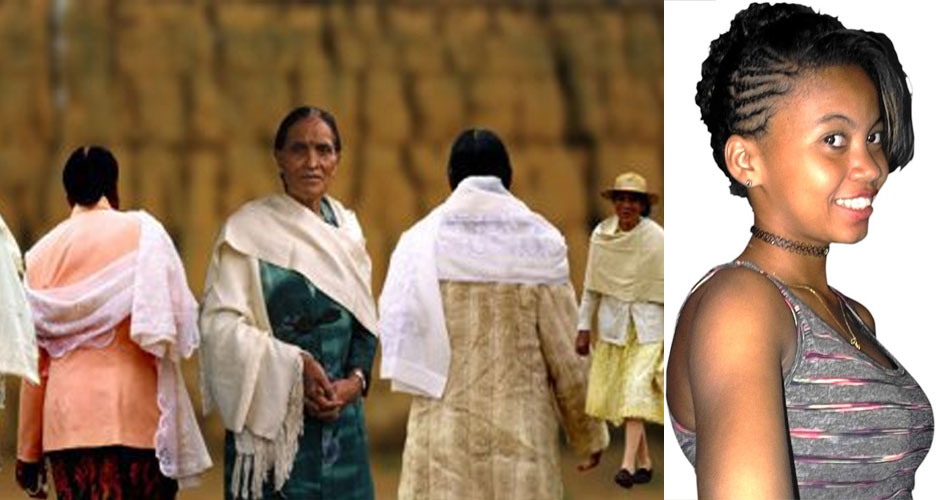
For Merina women, braids formed a true social language, varying by age, family lineage and social status. This codification was especially visible in the Analamanga region, where women from the same lineage wore identical hairstyles at circumcision ceremonies, marking their family belonging.
A woman’s life cycle was marked by different emblematic hairstyles:
- Young girls wore the “lambomiditra“, a symbol of childhood
- Teenage girls and women adopted the “tana ivoho“, a marker of adult femininity
- Widows had to wear the “bango tokana“, signaling their particular status
Braids as markers of social events
The role of braids in ceremonies
Braids hold a central place at the turning points of Merina life. At weddings, they become powerful symbols of alliance and union: the couple and their relatives wear specific braids that embody not only their union but also affirm their belonging to the Merina community.
Mourning hair traditions
Mourning periods came with particularly codified hair practices. A striking historical example is the death of Radama I: the population had to shave their heads three times over, expressing collective mourning. This practice allowed for only rare exceptions, reserved for crown princes and their close circle, underlining the social and hierarchical dimension of these traditions.
Social codification through hairstyles
An elaborate system of social distinction
Merina society developed a sophisticated system in which hairstyles serve as true social identity cards. Each type of braid conveys precise information about the person wearing it: their age, their family belonging, and their position in the social hierarchy.
The example of regional practices
In the Analamanga region, this codification reaches a remarkable level of precision. At circumcision ceremonies, women from the same family adopt identical hairstyles, creating an immediate visual identification of their family belonging. Likewise, widows are set apart by specific hairstyles, making their particular marital status instantly recognizable within the social space.
This structuring of hairstyles reflects the complexity and richness of the Merina social system, where every hair detail contributes to building and maintaining community bonds.
Social codification through braids
A complex system of meaning
Merina braids form a sophisticated visual communication system, in which every detail precisely conveys a person’s social identity. This codified hair tradition finely reflects the age, status, and position of each individual within the community.
The three emblematic women’s hairstyles
The “Lambomiditra”: the innocence of childhood
Young Merina girls wear the “Lambomiditra“, a hairstyle that embodies childhood in all its purity. This hairstyle stands out for its delicate ornaments: colorful ribbons and small accessories that highlight the lightness of these youthful years. Moving on to other styles symbolically marks the entry into adolescence, reflecting the changing status and social role of the young person.
The “Tana ivoho”: celebrating femininity
For teenage girls and women, the “tana ivoho” represents the flowering of femininity and social maturity. This elaborate hairstyle is adorned with jewels and beads that are not mere decoration but markers of social status. Deeply rooted in Merina rituals and beliefs, it symbolizes the acquisition of social standing and the establishment of a respected position within the community.
The “Bango tokana”: the expression of mourning
The “bango tokana“, worn by widows, visually expresses the experience of grief and loss. Its distinctive look, playing on the contrast between black and white, conveys sorrow while showing the respect owed to the deceased. This hairstyle is part of a broader set of rituals and beliefs that structure the mourning period according to Merina tradition.
The collective dimension of hairstyles
This hierarchical organization of hairstyles reveals the complexity of the Merina social fabric. Every hairstyle contributes to the legibility of social relationships and strengthens community cohesion, creating a visual language immediately understood by every member of the group.
Merina men’s hairstyles: a historical evolution
The tradition of men’s braids in the 19th century
At the start of the 19th century, Merina society had a rich tradition of men’s hairstyles. Men, like women, wore their hair in small braids, often arranged into little curls. This practice reflected an era in which male appearance was highly codified and carried social meaning.
Royal hairstyles and their symbolism
Social hierarchy was clearly expressed through hairstyles. King Andrianampoinimerina stood out with a unique hairstyle called “ny boko antompona“, marking his supreme position. Andriamasinavalona and his subjects wore a different style, marked by a longer topknot, creating a clear visual distinction within the social hierarchy.
The historic shift: the end of men’s braids
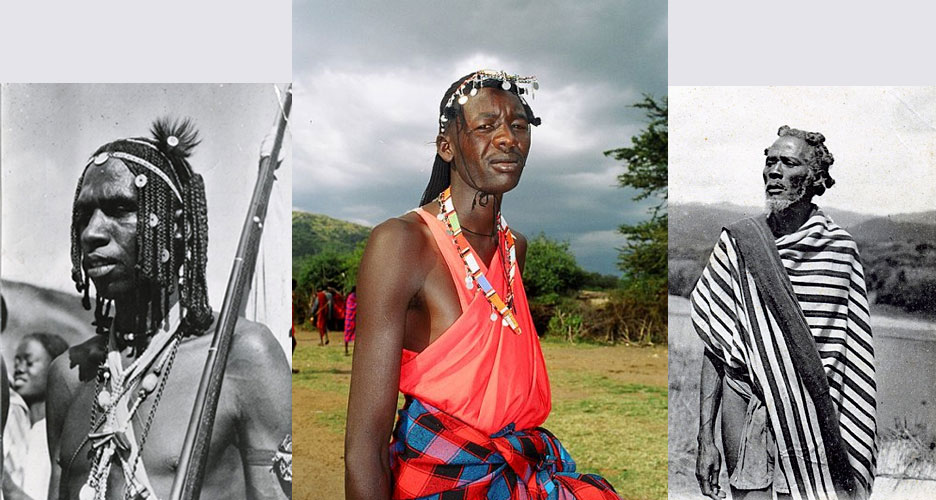
The shift away from braids happened gradually, mainly for military reasons. Well before the 1914 war, Merina men, followed by the Betsileo, abandoned these traditional hairstyles in favor of more practical styles.
A documented historical legacy
The accounts of Alfred and Guillaume Grandidier give us a valuable record of these hair traditions. Their observations highlight how men’s hairstyles served as true social markers, indicating:
- Family belonging
- Marital status
- Social rank
The shift toward modernity
At the start of the 20th century, the practical demands of military life hastened men’s abandonment of braids. Long, braided hair, once a symbol of status, became a liability in the modern military context. This shift reflects how Merina society adapted to new social and political realities.
This evolution of men’s hairstyles perfectly illustrates how cultural traditions adapt to historical change while keeping their deep social meaning alive in collective memory.
Despite men abandoning braids, Merina women continued to wear braids, which became a symbol of beauty and femininity. Braids remain an important part of Merina culture and are often tied to unique rituals and beliefs.
Mourning hair traditions in Merina society
Mourning practices and their symbolism
In Merina culture, hair and braids carry a deeply spiritual meaning during periods of mourning. These hair practices are not mere traditions; they form a complex symbolic language expressing respect for the deceased and marking the stages of the mourning process.
Royal mourning: a collective ritual
The death of a member of the royal family triggered a particularly strict protocol. The entire Merina people had to take part in a hair-sacrifice ritual:
- Men and women shaved their heads completely
- Only crown princes and their close circle were exempt from this obligation
- This mourning period traditionally lasted a full year
This collective ritual was far more than a simple symbolic gesture; it embodied the people’s unity in grief and the renewal of the social cycle after the loss of a leader.
Hair taboos: a complex system of beliefs
The prohibitions linked to hair during mourning reflect an elaborate system of beliefs. Among the most significant rules:
- The prohibition on cutting one’s hair on one’s birthday, under penalty of illness
- The prohibition on thanking one’s hairdresser
- The prohibition on counting someone’s braids
Far from being mere superstitions, these taboos form a coherent set of practices that shape social behavior during mourning and strengthen community bonds.
The cultural legacy of mourning
Passing these traditions down from generation to generation underlines their fundamental importance to Merina cultural identity. These mourning practices, with their rules and taboos, create a framework that lets the community collectively get through periods of loss and social change.
Mourning hair rituals perfectly illustrate how Merina society developed a sophisticated system of cultural practices that combine the expression of personal grief with the preservation of social cohesion.
Beliefs and hair traditions in Merina society
The spiritual heritage of braids
In Merina culture, braids represent far more than a simple aesthetic practice. They embody a complex system of beliefs and myths passed down through generations, creating a strong spiritual bond between the living and their ancestors. This hair tradition reflects an ancestral wisdom that continues to shape the daily life of the Merina.
The system of hair taboos
The taboos surrounding hair and braids in Merina society form a coherent set of rules that shape social behavior. Here is how this system plays out:
Time-based taboos
The prohibition on cutting one’s hair on one’s birthday illustrates the belief in favorable and unfavorable times for hair care. The feared consequence — falling ill — highlights the perceived link between physical health and respect for hair traditions.
Social taboos
The prohibition on thanking one’s hairdresser or counting braids reveals a sophisticated understanding of social interaction around hair care. The threat of going bald if the rule is broken shows how these beliefs regulate social behavior through symbolic consequences.
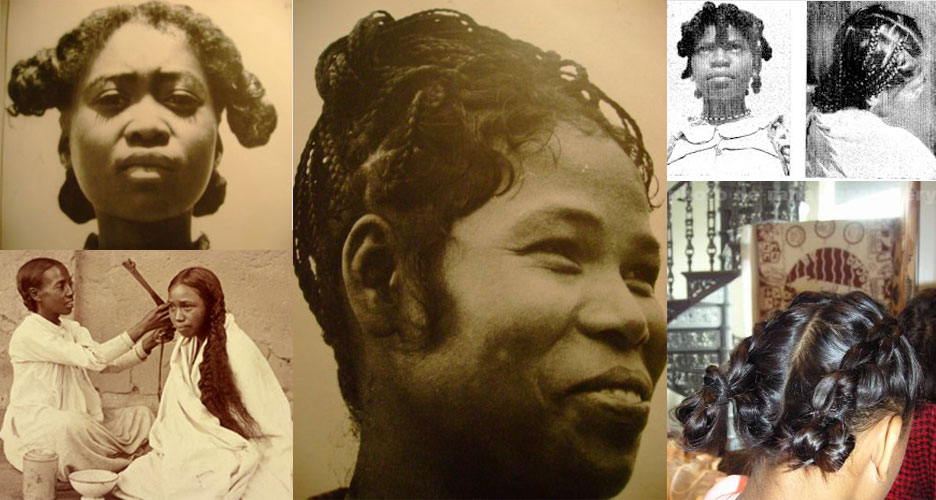
Intergenerational transmission
Passing these beliefs on from generation to generation plays a crucial role in maintaining Merina cultural identity. These traditions are not mere superstitions; they form an intangible heritage that:
- Strengthens community bonds
- Upholds respect for ancestral traditions
- Structures social relationships
- Preserves a unique worldview
This ongoing transmission of beliefs about braids demonstrates the vitality of Merina culture and its ability to maintain its traditions while adapting to the modern world. Hair taboos and beliefs thus serve as a bridge between past and present, helping preserve Merina cultural identity.
Conclusion: The Meaning of Braids in Merina Culture: A Living Tradition
A rich cultural synthesis
Braids in Merina society represent far more than a simple aesthetic expression. They form a complex system of social communication that spans generations and structures community relationships. This hair tradition encodes essential information about identity, social status, and the key moments in the lives of society’s members.
The evolution of a dynamic tradition
Over time, braiding practices have shown a remarkable ability to adapt to social and cultural change. While evolving to meet contemporary needs, they have preserved their deep meaning within the Merina community. This adaptability reflects the resilience of Merina culture and its capacity to maintain its essential traditions while meeting the demands of modernity.
The ritual and spiritual role
Braids play an especially significant role during periods of mourning, where they become a vehicle for expressing respect and remembrance. The specific traditions and taboos surrounding hair practices during these times reveal the spiritual depth of this custom.
A living heritage
The beliefs and practices tied to braids continue to be passed down from generation to generation, reinforcing Merina cultural identity. This intergenerational transmission goes beyond braiding techniques alone; it encompasses an entire system of values, beliefs, and traditions that define belonging to the Merina community.
The persistence and evolution of these hair traditions show how a cultural practice can act as a bridge between past and present, keeping a people’s identity alive while adapting to the changes of the modern world. Merina braids are thus a remarkable example of how cultural traditions can remain relevant and meaningful across time, all while preserving their deep essence.
Braids are an essential part of Merina culture, carrying a rich history and unique traditions passed down from generation to generation.
Sources: