
Mindful Learning: Transforming Study into a Spiritual Practice

“Learning is an inner journey, a meeting with yourself through knowledge.” – Carl Gustav Jung
Watching how we relate to learning is the same as watching how we relate to the world. In the quiet moments of our day, we all search for ways to absorb, understand, and grow. Mindful learning isn’t just about gathering facts; it’s a path of awakening where each learning method becomes a meditative practice. In an age of information overload, cultivating a contemplative approach to knowledge turns study into deep transformation. Practical wisdom teaches us that true understanding is not memorizing, but weaving knowledge into the tapestry of our being. How can our learning practices become bridges to an expanded consciousness? discover how to embrace deep reading
“In the garden of learning, each method is a flower guiding us toward the light of comprehension.” – Thich Nhat Hanh
The Feynman Method: Finding Inner Clarity
Like a master teaching a child, the Feynman Method invites us to explore simplification as a route to enlightenment. Richard Feynman, the poetic physicist, gave us a practice that transcends study and becomes an exercise in intellectual humility. unlock your brain’s power and grow
In the silence of reflection we discover that understanding by explaining is active meditation. When we reshape complex ideas with simple words, we build a bridge between mind and the very essence of knowledge.
Guided practice:
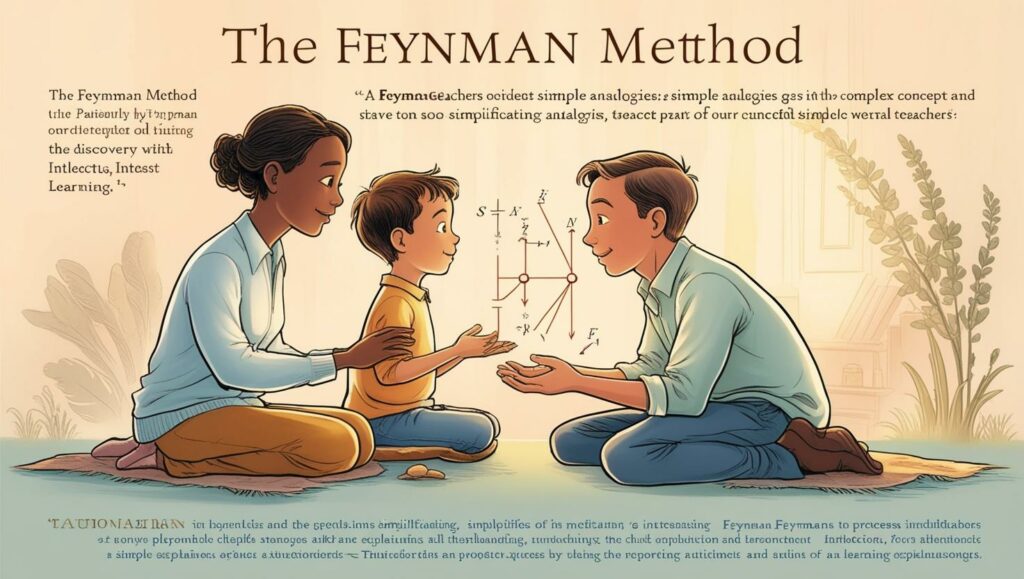
- Choose a concept like you would select a seed to plant
- Meditate on its deep essence
- Explain it with the pure curiosity of a child discovering the world
- Notice the shadows where your understanding wavers
- Return humbly to the source to cultivate clarity of consciousness
This study method develops a mindful presence around our thinking process, turning every learning act into a moment of spiritual growth.
Spaced Repetition: The Memory Ecosystem
Spaced repetition works like seasonal cycles in the mind. It honors the natural forgetting curve, collaborating with nature rather than fighting it. This memory technique invites us to respect the biological rhythm of knowledge acquisition.
Watching how patiently nature ripens fruit teaches us that lasting learning needs time and conscious repetition. Each review becomes a mindfulness ritual, a gentle return to what we cherish.
Conscious review practice:
- Create meditative pauses between study sessions
- Use technology mindfully (e.g., Anki as a practice aid)
- Observe the natural cycle of recall and forgetting
- Celebrate every moment a memory re‑emerges
This approach turns memorization from a chore into an art of living, where each act of remembering becomes a practice of present‑moment awareness.
The Pomodoro Technique: Breathing Work
The Pomodoro Technique is moving meditation—a dance between focus and rest. Like breath itself, it teaches the natural rhythm of conscious attention.
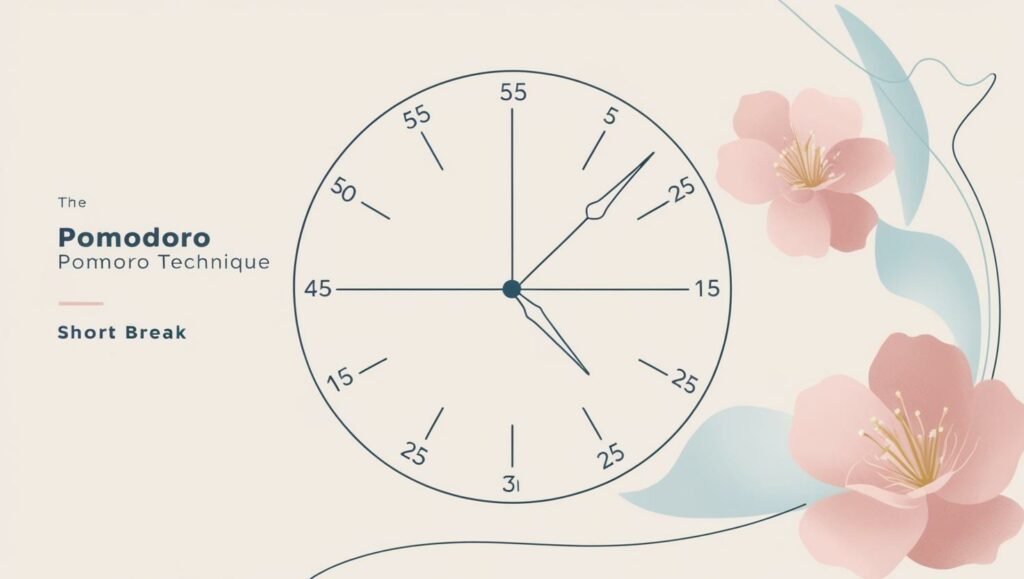
During those 25 minutes of total presence, we uncover the depth of our concentration potential. Breaks become sacred moments of returning to self, letting the mind regenerate like a flower opening at sunrise.
Rhythmic practice:
- Honor natural cycles of attention
- Prioritize quality of presence over sheer quantity
- Integrate contemplative pauses as spiritual resources
- Observe without judgment the fluctuations of your mental energy
This method evolves into a mindfulness practice, where each pomodoro feels like a mini‑retreat within the learning journey.
Mind Mapping: Charting the Soul’s Landscape
Mind mapping is the art of giving visible shape to thought. Like a mandala, each mind map reveals sacred connections between ideas, turning the abstract into visual contemplation.
When we create these thought diagrams, we become both artist and artwork. Every branch is a meditation on relationship; every color celebrates the diversity of concepts.
Conscious mapping practice:
- Start at the center, mirroring a centering meditation
- Breathe into each connection you draw
- Use creativity as a bridge between knowledge and wisdom
- Notice the natural patterns of organization that emerge
This visual method becomes a transformative tool, where the act of creating nourishes us as much as the final map.
Learning by Doing: Experience as Teacher
In the quiet of action we discover that practicing is meditating. Active learning transcends the mind, embracing the whole self. Teaching becomes a conscious service, where sharing pure knowledge purifies our own understanding.
Practice grounds us in present reality, turning theory into living wisdom. Every exercise offers a chance for deep integration, where body, mind and heart meet in the act of learning.
Full‑integration practice:
- Turn each application into a meditation in motion
- Teach with humility, learn with gratitude
- Observe resistances as lessons
- Celebrate every moment of practical insight
This experiential approach reminds us that true knowledge cannot be separated from lived experience.
Closing Garden: Cultivating Mindful Learning
Each of these five learning methods is a flower in the garden of consciousness. The Feynman Method offers mental clarity, spaced repetition nurtures patience, Pomodoro teaches rhythm, mind maps reveal connection, and active practice roots us in experience.
Seeing how these techniques intertwine shows that mindful learning is an act of awakening. Every memory technique becomes a meditation tool, each study strategy a path of transformation. learn how personal development books help
The wisdom of learning invites us to experiment without clinging to outcomes, to practice with devotion while staying detached from the fruits. Like water shaping the vessel that holds it, adapt these contemplative methods to the unique essence of yourself.
In the silence of your heart, which method resonates most deeply with your path of awakening?
Suggested Practices to Deepen Your Journey
- Learning meditation – 5 minutes of silence before each study session
- Gratitude journal for the insights you gain
- Create a study sanctuary as a sacred space
- Practice conscious breathing between learning intervals
Resources for Inner Exploration
- “Mindfulness and the Art of Learning” – Daniel Siegel
- “Meditation for Understanding” – Jon Kabat‑Zinn
- “The Garden of the Mind” – Jiddu Krishnamurti
Keywords: mindful learning, learning methods, spiritual development, meditation and memory, concentration techniques, practical wisdom
Suggested follow‑up reads:
- Meditation as the foundation of learning 🌿
- The art of attentive presence in education 🕊️
- How to turn your studies into a spiritual practice 🌙