What Jim Rohn’s Mentorship Really Taught Tony Robbins

By the editorial team – verified from the verbatim transcription of the PBD Podcast (Patrick Bet‑David)
| ⚡ Quick take – 2‑minute read |
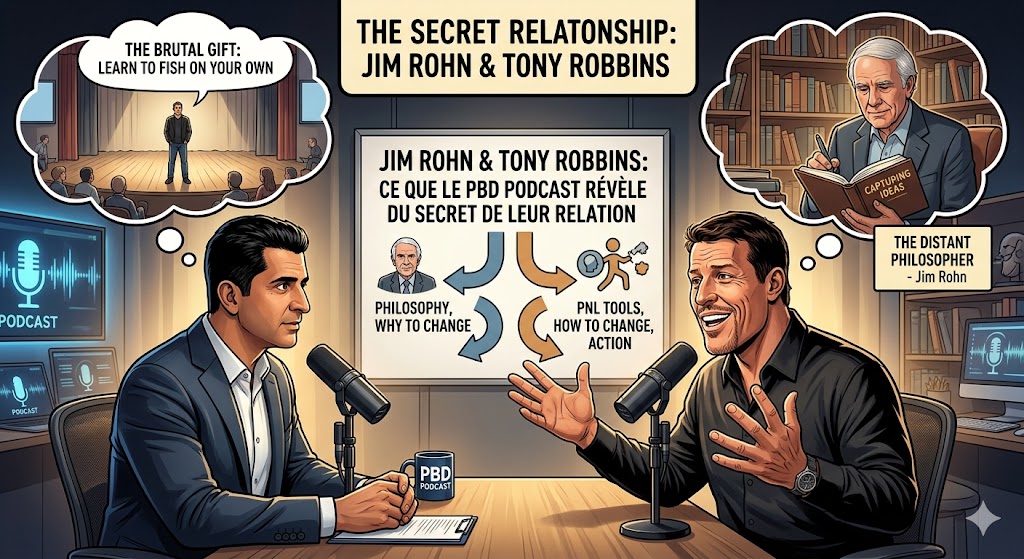
| In a striking excerpt from the PBD Podcast, Patrick Bet‑David (PBD) grills Tony Robbins about his relationship with Jim Rohn – the mentor who launched him at 17. Robbins’ answer flips the script: Jim wasn’t a hands‑on manager. He was remote, shielded by a network‑marketing system, and that very distance forged the entrepreneur Tony became. The biggest takeaway? The true gift of a mentor isn’t a check. It’s the pressure to figure things out on your own. |
Why Every Personal‑Growth Fan Keeps Asking This Question
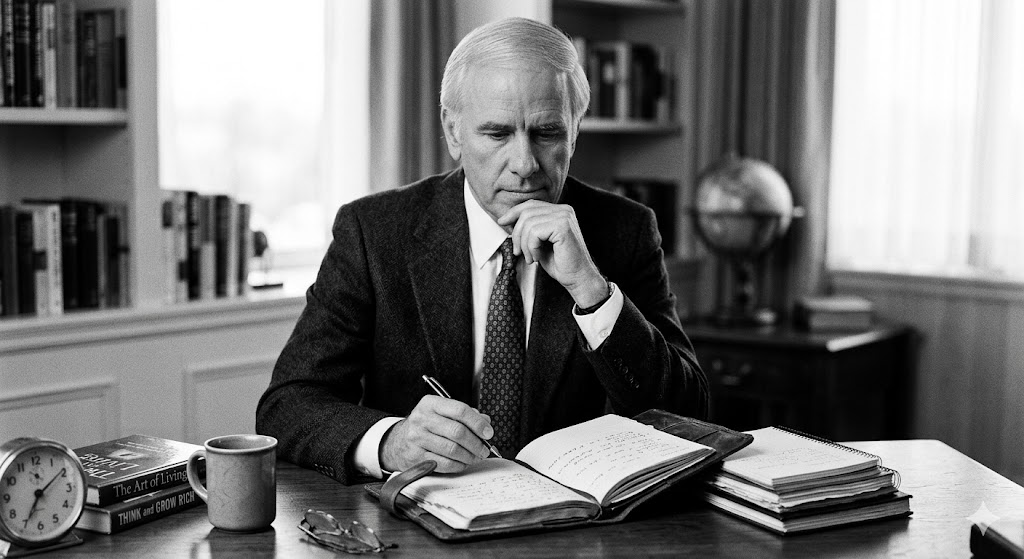
“Tony, it’s wild you’re 48 now… When you were with Jim, how close did you actually get? Were there behind‑the‑scenes things you never see in his books?” — Patrick Bet‑David
This single question from Patrick Bet‑David sums up the collective obsession with Jim Rohn. turn childhood dreams into reality Millions have seen the yellow cover of Seven Strategies for Wealth and Happiness, memorized his slogans – “If you want things to change, you have to change” – and imagined the man behind the storyteller. But who was Jim Rohn when the doors were closed?
PBD immediately notes he sees several faces in Tony Robbins: the negotiator, the Monday‑morning leader, and the “crisis‑manager.” He wants to know if Jim Rohn wore the same many‑hatted crown. Tony’s answer shatters a few myths in under five minutes.
The Real Story Behind Jim Rohn’s “Distance”
The first myth collapses by the second minute of the clip. Tony Robbins confirms Jim Rohn was, in his own words, “very separate” – not out of arrogance, but by design. Jim built his empire on a network‑marketing model, with a handful of California offices and roughly twenty salespeople under each roof. He was protected by the system, not knee‑deep in the day‑to‑day grind.
What we uncover underneath:
- Myth: Jim Rohn, the all‑seeing leader coaching every salesperson, present on every front.
- Reality: A podium‑talker and philosopher. Crisis handling, sales, and recruiting fell to intermediaries – the “brokers” like Tony.
- Nuance: This distance wasn’t a weakness. It defined his role: corporate philosopher, not sales director.
| Jim Rohn, the “father of modern personal development” |
| Jim Rohn is often hailed as the father of modern personal development. His books – especially Leading an Inspired Life and Seven Strategies for Wealth and Happiness – remain staples 20 years after his 2009 passing. Yet his 1970‑80s business was that of an independent speaker‑trainer, not a CEO. Tony Robbins inherited that model… before taking it global. |
The Late‑Stage Vulnerability: A Connection That Came Too Late
A quiet melancholy runs through this part of the clip. If Jim Rohn was distant in his heyday, mortality flipped the script.
Tony Robbins, in a low voice:
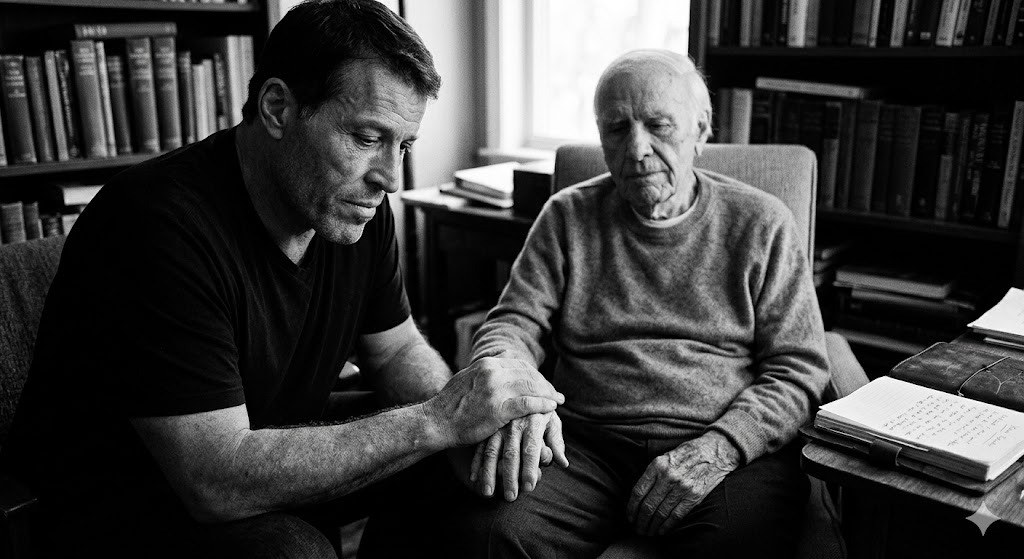
“I later got to be close to him as he faced his own mortality. I spoke at his funeral. He was a deeply loving man, guided by common sense.” — Tony Robbins
Jim Rohn died in December 2009, aged 79, from pulmonary fibrosis.
The bookshelf behind them nods to their shared intellectual legacy, while the open journal is a subtle reminder of the discipline Jim Rohn championed earlier.
Only in these final months did their relationship turn personal. Tony describes a man who was profoundly loving, on a mission to share plain‑spoken truths to those who’d never heard them.
The contrast is stark: Tony talks ten times faster than Jim. One is a Formula 1 engine, the other a Socratic philosophy professor. Their complementary styles made the partnership work.
Phase 2: Jim Rohn’s Brutal Gift
The most instructive moment arrives next. Tony expected funding, a Beverly Hills office, and a 30‑person staff. Jim had another plan.
“Oh no, that’s Phase 2. That’s YOUR business. You hire me to show up, you’re the broker, you fill the room yourself – and you keep half the profits.” — Jim Rohn to Tony Robbins
A $35 ticket for 500 attendees equals $17,500 in revenue, with $8,000 slated for Tony. Generous on paper, but Tony had never booked 1,000 seats. He had to rent the venue, open the office, run logistics – entirely alone.
This decision reveals Jim Rohn’s teaching philosophy:
- He didn’t give a fish. He forced you to learn to fish – in deep water, right away.
- Vulnerability as a teaching tool: Tony spoke to four people, two of them drunk, and learned to own the room.
- Autonomy before comfort: no safety net, no turnkey office. Result – Tony became an entrepreneur overnight.
What This Means for Anyone Seeking a Mentor Today
Most people look for a mentor who validates, finances, protects. Jim Rohn offered something different: a confrontation with reality. In today’s coaching culture – where “mastermind” retreats cost €30 000 – this approach feels almost brutal, yet it’s the most effective. practical lessons from Jim Rohn provide deeper insight.
The Late‑Stage Vulnerability: A Connection That Came Too Late
A quiet melancholy runs through this part of the clip. If Jim Rohn was distant in his heyday, mortality flipped the script.
Tony Robbins, in a low voice:
“I later got to be close to him as he faced his own mortality. I spoke at his funeral. He was a deeply loving man, guided by common sense.” — Tony Robbins
Jim Rohn died in December 2009, aged 79, from pulmonary fibrosis.
The bookshelf behind them nods to their shared intellectual legacy, while the open journal is a subtle reminder of the discipline Jim Rohn championed earlier.
Only in these final months did their relationship turn personal. Tony describes a man who was profoundly loving, on a mission to share plain‑spoken truths to those who’d never heard them.
The contrast is stark: Tony talks ten times faster than Jim. One is a Formula 1 engine, the other a Socratic philosophy professor. Their complementary styles made the partnership work.
FAQ – What the Books Don’t Reveal
Was Jim Rohn as influential as Tony Robbins in his time?
No. Their scales differ. As Tony confirms, Jim operated primarily in California, with about 20 offices and three seminars every eight weeks (each 3.5 hours). Tony later industrialized that model worldwide.
How did Jim Rohn handle a tough conversation?
According to Robbins, he didn’t manage operational crises. His MLM structure gave him natural protection. Daily tensions were delegated to brokers and regional managers – a key insight from the clip.
Why does PBD talk about several “Tonys”?
PBD is probing whether Jim, like Tony, had multiple leadership facets: negotiator, structured leader, crisis manager. His question reflects his own framework for analyzing leaders, and the excerpt shows that Jim’s distance kept many of those facets hidden.
Which Jim Rohn books does Tony Robbins recommend?
Tony mentions two titles in the clip, ones he hesitates to give his eldest son: Leading an Inspired Life and Seven Strategies for Wealth and Happiness – the famous yellow‑cover book that still serves as the gateway to Rohn’s work.
Conclusion: Two Philosophies, One Goal
During the five years he spent beside Jim Rohn – from age 17 to 22 – Tony Robbins absorbed the philosophy: understand why change is necessary before you can change.
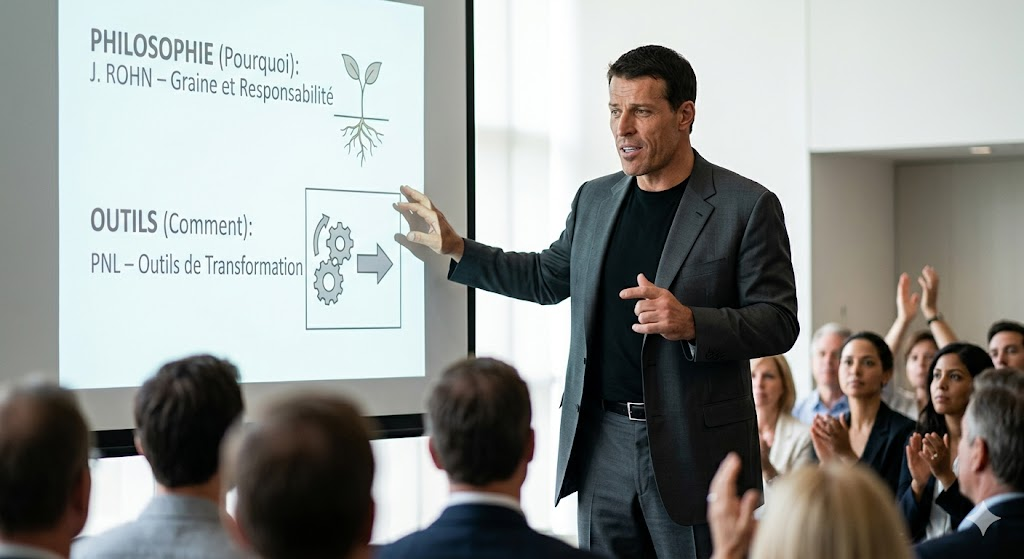
What really propelled him forward was exposure to John Grinder’s NLP, giving him the how to turn a lifelong phobia into a 20‑minute breakthrough.
This clip reminds us that a great mentor doesn’t need to be omniscient or omnipresent. Jim Rohn was a business philosopher, not a crisis manager. He planted a seed in a 17‑year‑old kid from nowhere, forced him to take risks, then stepped back. The rest? Tony built the empire.