How to reduce stress naturally and restore lasting balance?

Stress takes hold. silently. It tires. It drains. It blocks. How to reduce stress naturally ?
So, how can you reduce stress naturally without relying on artificial solutions?
Good news: there are simple, accessible natural anti-stress techniques.
Breathing, habits, plants… small changes can make a big difference.
Less tension. More clarity. Your balance begins here — at the heart of mental well-being.
“It is not stress that kills us, but our reaction to it.” — Hans Selye
Let’s be honest: stress is part of everyday life.
But when it becomes constant, it can turn into chronic stress solutions must then be found quickly.
The good news? It is possible to regain control through natural and effective methods.
In this article, discover How to reduce stress naturally with practical techniques: breathing, lifestyle habits, mental strategies, and natural stress remedies.
Understanding stress to manage It better

Stress is a natural reaction of the body when faced with a situation perceived as a threat. In small doses, it can be beneficial — it motivates and alerts us.
But when it becomes chronic, it disrupts overall balance and requires genuine stress management.
Persistent fatigue, irritability, sleep disturbances… these signals should not be ignored.
The real issue is not stress itself, but its accumulation.
Understanding how it works is the first step towards reducing stress naturally and effectively.
Natural techniques to soothe stress
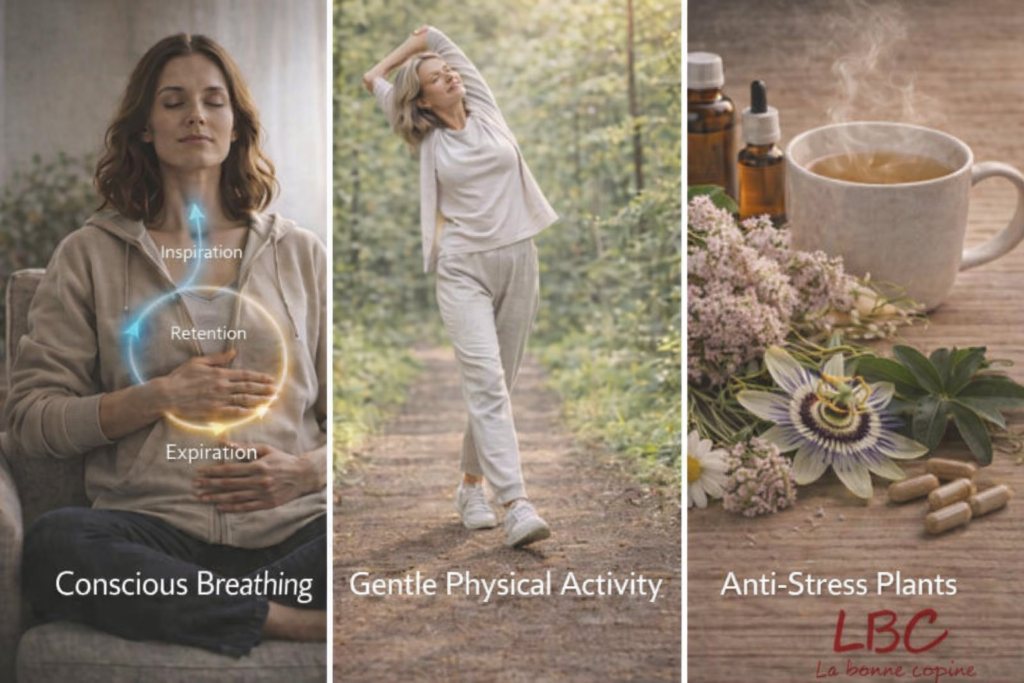
Conscious Breathing
Slow, deep breathing helps to calm the nervous system instantly.
A simple exercise:
- Inhale for 4 seconds
- Hold your breath for 4 seconds
- Exhale slowly for 6 seconds
Repeat for a few minutes to feel the effects.
Gentle physical activity
Moving your body helps release accumulated tension and promotes natural relaxation.
No need for performance:
- Outdoor walking
- Yoga
- Stretching
Even 20 minutes a day can significantly reduce stress.
Anti-stress plants
Certain plants are known for their soothing effects and are among the best natural stress remedies:
- Chamomile
- Valerian
- Passionflower
They can be taken as herbal teas or natural supplements.
These simple solutions help reduce stress naturally without disrupting your daily routine.
Adopting sustainable anti-stress habits
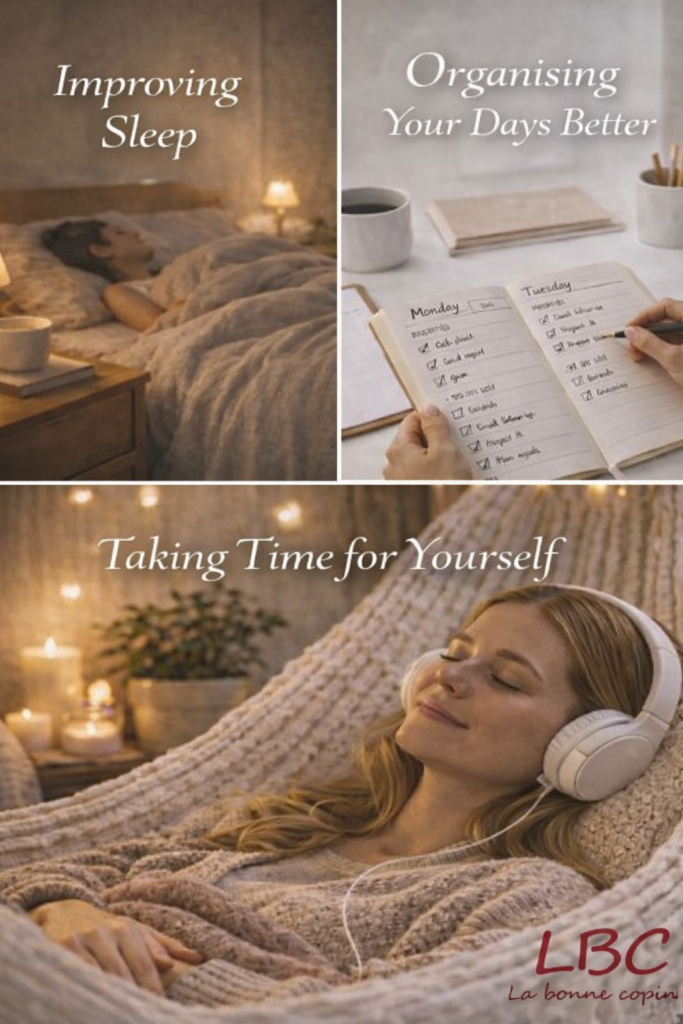
Improving sleep
Sleep plays a key role in managing stress and maintaining mental well-being.
A few good practices:
- Avoid screens before bedtime
- Go to bed at regular hours
- Create a calming evening routine
Organising your days better
Stress often stems from mental overload.
To counter this:
- Prioritise essential tasks
- Simplify your schedule
- Avoid excessive multitasking
Taking time for yourself
Allowing yourself moments of pause is essential for natural relaxation.
Reading, listening to music, or simply doing nothing helps recharge your batteries.
In the long term, these habits help to reduce stress naturally and sustainably.
Reprogramming the mind to face stress
Our thoughts directly influence our level of stress.
Learning to take a step back profoundly changes the way we react and helps to reduce anxiety naturally.
Effective techniques
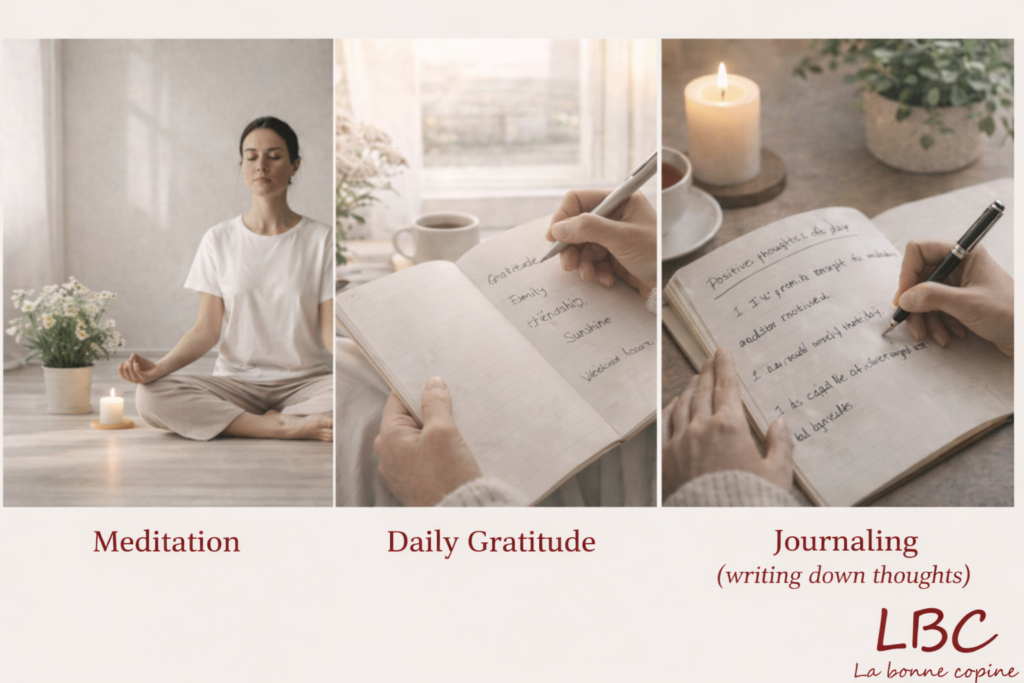
- Meditation
- Daily gratitude
- Journaling (writing down thoughts)
A simple example: noting three positive things each day helps redirect attention towards the positive.
Acting on the mind is a powerful key to reducing stress naturally.
Conclusion – balance restored
Reducing stress does not require a radical transformation.
With simple actions — anti-stress breathing, movement, healthier habits, and mental work — it is possible to regain lasting balance.
Ultimately, learning how to reduce stress naturally becomes a gradual, accessible, and profoundly beneficial approach to everyday mental well-being.