Self-confidence: is the hand-in-pocket trick real or a myth?

Before a meeting or an interview, you may be hunting for that one small move that makes you look sure of yourself: a hand in your pocket, shoulders back, two minutes of a “power pose” in the office loo. Here’s the good news: a steadier posture can help you feel more at ease in your body. The less good news: the promises floating around online (shifting hormones, a transformation in 60 seconds) don’t hold up against the research. Here is what we actually know about self-confidence and body language, and what you can try without kidding yourself.
Key takeaways
- The hormonal effects of power poses were not confirmed by a larger replication.
- The famous “93% non-verbal communication” figure is a distortion of very narrow experiments.
- None of the sources we read shows that a hand in your pocket boosts confidence: it is a gesture to test, depending on the setting.
- Reframing nerves as excitement has been tested in the lab.
Power poses: what the research really showed
In 2010, Dana Carney, Amy Cuddy and Andy Yap published a study in Psychological Science on 42 people. It claimed that holding a “powerful” posture for a couple of minutes (standing tall with arms wide, for instance) changed testosterone, cortisol and willingness to take financial risks. The idea went global, and it is where most articles on the subject come from, including the first version of this one.
Five years later, a team at the University of Zurich repeated the experiment with 200 participants (Ranehill and colleagues, 2015). The result: people who struck the pose did say they felt more powerful, but neither testosterone, cortisol nor risk-taking moved. Dana Carney, first author of the 2010 study, has since written publicly that she no longer believes in these effects.
What you can safely take away: an open posture may change how you feel in the moment, but nothing allows anyone to promise an effect on your hormones or your career. The “thousands of women transformed” and neatly numbered testimonials you sometimes see have no source behind them, so we have left them out.
The “93%” figure: where does it come from?
You will often hear that 93% of communication is non-verbal. The figure comes from experiments run by Albert Mehrabian in the 1960s, in which people heard a single word spoken in a certain tone, alongside a facial expression, and had to guess whether the speaker liked someone. According to the summaries we read, Mehrabian himself stressed that these proportions only apply to the expression of feelings and attitudes, not to every conversation.
In other words, your body matters, but it does not carry nine-tenths of your message. For a wider look at the gestures that go with speech, have a read of our piece on non-verbal communication.
Hand in pocket and self-confidence: a gesture to test, not a magic formula
In the sources we read for this article, no study specifically tests the effect of a hand in your pocket on self-confidence. Claims about blood circulation, breathing or “relaxed mastery” found elsewhere are therefore unproven. The gesture can look easy-going in an informal chat and a touch too casual in a very formal setting: it depends on the place, the people in the room and how you move.
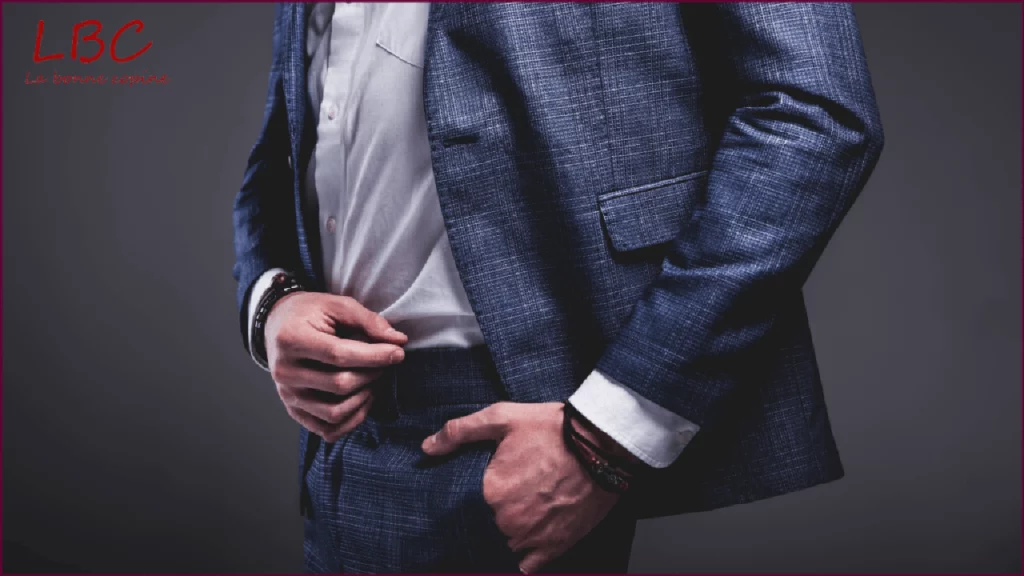
If the idea appeals, here is a sensible way to try it:
- Pick a low-stakes situation: waiting for a colleague, chatting standing up at a break.
- Keep your back straight and shoulders loose, with just one hand in your pocket.
- Take it out as soon as you want to emphasise a point or you are speaking to someone formal.
- Notice how you feel, without trying to play a part.
A better-supported idea: turn nerves into excitement
One approach has been tested more seriously. Alison Wood Brooks (Harvard Business School) published a series of three experiments on 441 people in the Journal of Experimental Psychology: General (American Psychological Association press release, December 2013). Before a speech, a maths task or karaoke, people told to say “I am excited” did better than those who said “I am calm” or nothing at all. At karaoke, for example, the “excited” group averaged 80% on a score based on pitch, rhythm and volume, against 69% for those who said they were calm, angry or sad.
A word of caution: these were one-off laboratory experiments. The idea is simple, though. Nerves and excitement are both high-energy states, and it can be easier to change the label than to force yourself to be calm.
A five-minute exercise to practise
No need for weeks in front of the mirror. Before your next nerve-racking moment, take five minutes and do this:
- Rate your stress from 0 to 10 on a sticky note.
- Plant both feet, unclench your jaw and shoulders, and breathe slowly three times.
- Say quietly, “I’m excited to do this”, even if you only half believe it.
- Try a single gesture (a hand in your pocket, open hands as you talk) and rate your stress again afterwards.
The point is not to hit a score but to spot what helps you. These little experiments pair nicely with broader routines, like the ones in our guide to developing your assurance for a fulfilling life.
You can also ask a trusted friend what she sees: a kind outside eye helps you adjust a gesture that looks stiff or, on the contrary, comes across as natural.
Body language pitfalls to avoid
Overplaying assurance. A body that is forcing it soon looks like a mask. A simple gesture you can live with beats a stage pose.
Forgetting what you are saying. A gesture cannot rescue a vague message. If your body says “all fine” while your voice wobbles, nobody is fooled, and that’s okay: you can simply say you’re a bit nervous.
Ignoring the context. Codes vary between countries, workplaces and people. Notice how others hold themselves in the room before choosing your gesture.
Believing it all comes from the body. Confidence is also fed by preparation, small wins and kindness towards yourself. If your real struggle is speaking up, our article on saying no assertively while keeping your relationships may help more than any pose.
When to ask for help
A bit of nerves before speaking is common. If the fear of putting yourself forward has been holding you back for a long time, makes you avoid important situations or comes with symptoms that worry you, talk to your GP or a mental health professional. Asking for support is not a failure; it is an effective way of looking after yourself. If you are in acute distress, contact the emergency services in your country.
So, which gesture will you test this week?
Self-confidence isn’t settled in sixty seconds, and no gesture can decree it for you. A slightly steadier body, nerves met with curiosity and a few well-chosen experiments can, however, lighten your day-to-day. Choose one situation this week, one gesture, and notice what really changes. Which one do you fancy trying first?
Sources consulted on 28/10/2026: Ranehill et al. (2015), “Assessing the robustness of power posing: No effect on hormones and risk tolerance in a large sample of men and women”, Psychological Science (publisher version hosted by the University of Zurich, and University of Zurich press release of 1 April 2015); Dana Carney, “My position on power poses” (University of California, Berkeley page, undated); American Psychological Association, press release of 23 December 2013 on Alison Wood Brooks’s study (Journal of Experimental Psychology: General); fact-check summary of the “93%” figure on lenz.io, which gathers several secondary sources on Albert Mehrabian’s work (secondary source, to be treated with caution).