Food and the Menstrual Cycle: What to Eat to Feel Better Through Each Phase

Cravings for sugar before your period, a mid-cycle energy dip or a bloated stomach: your body can feel different throughout the month, and food may help you support it. But beware of the miracle promises often found online.
Here are some careful, practical guidelines about food and the menstrual cycle: what is sensible, what remains uncertain and when it is important to seek medical advice.
Key points
- A varied, regular diet remains the foundation, whatever the phase of your cycle.
- During your period, include sources of iron such as pulses, meat or green vegetables.
- Sugar cravings before your period are common and are not a personal failure.
- Cycle-based diets have limited solid evidence, so be cautious with rigid promises.
- Very painful or unusually heavy periods deserve professional medical advice.
What we know, and what remains uncertain
Food and the menstrual cycle can feel closely connected because hormonal changes may influence energy, appetite, sleep and digestive comfort. Not everyone experiences these changes with the same intensity, and that is normal.
What is reasonably well established is that blood loss can increase the need for iron, while eating regularly may help reduce energy dips during the day. For general information about iron sources and heavy periods, see the NHS guidance on iron and vitamins. If your periods come with difficult symptoms, you can also read our guide on ways to ease premenstrual symptoms.
What is much less certain is the idea that eating one specific food on one specific day can “balance your hormones”. Evidence for these precise protocols remains limited. Think of the suggestions below as comfort and self-care ideas, not as a medical programme.
During your period: iron and comfort
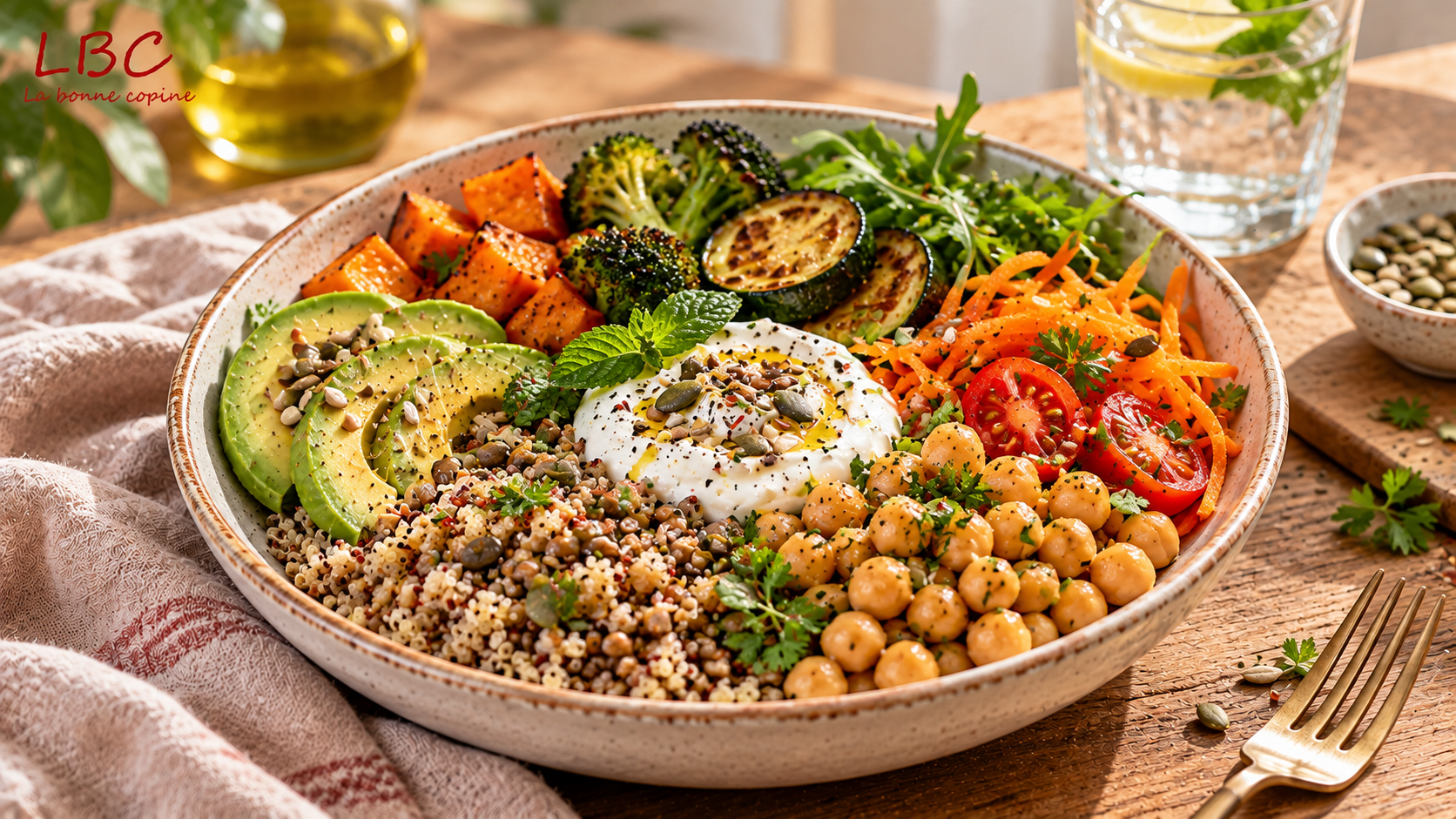
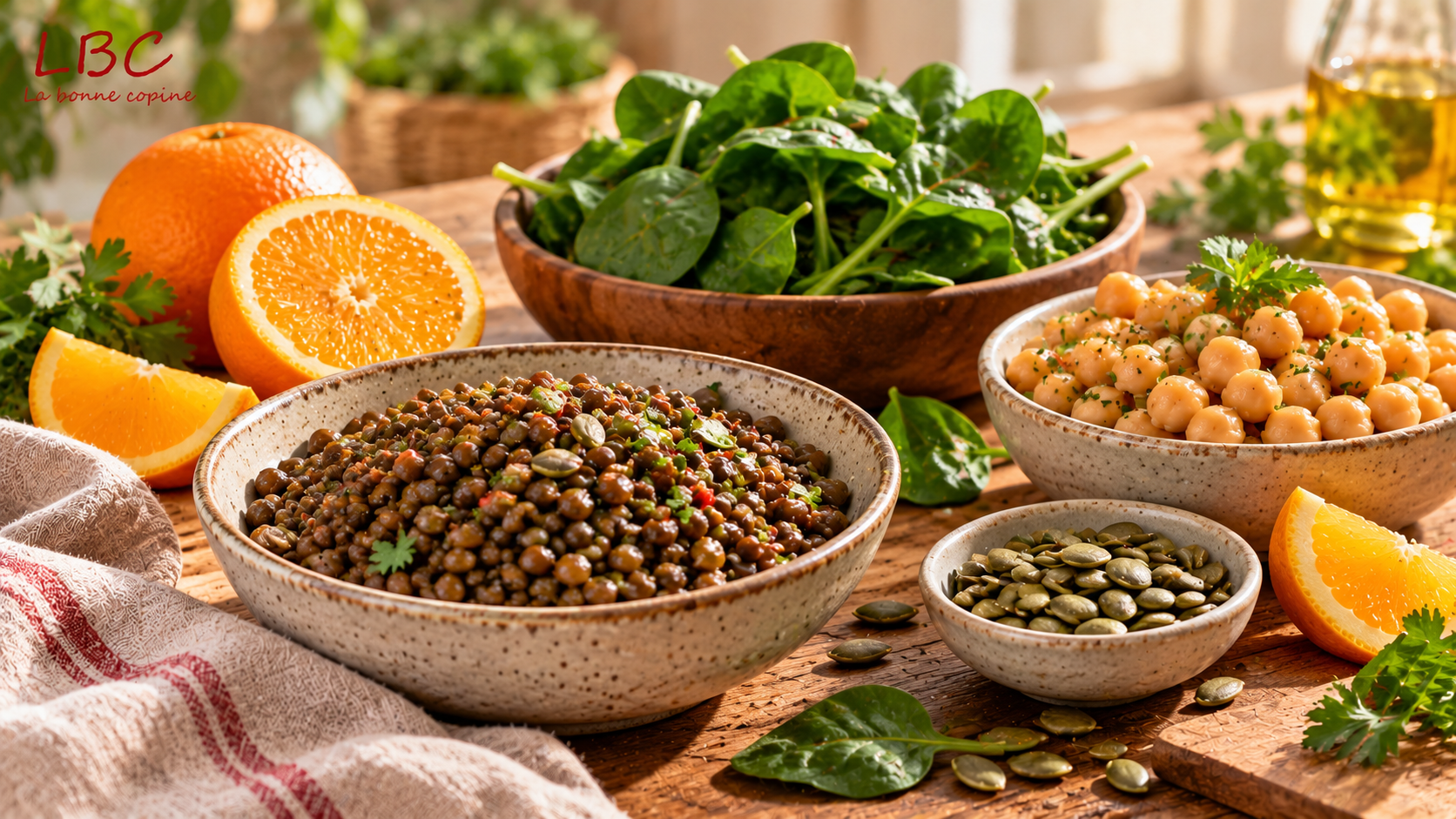
Choose warm, satisfying meals with sources of iron such as lentils, chickpeas, meat, eggs and spinach. Pairing plant-based sources of iron with vitamin C-rich foods such as citrus fruit or peppers can support iron absorption. Keep drinking water regularly.
A simple exercise
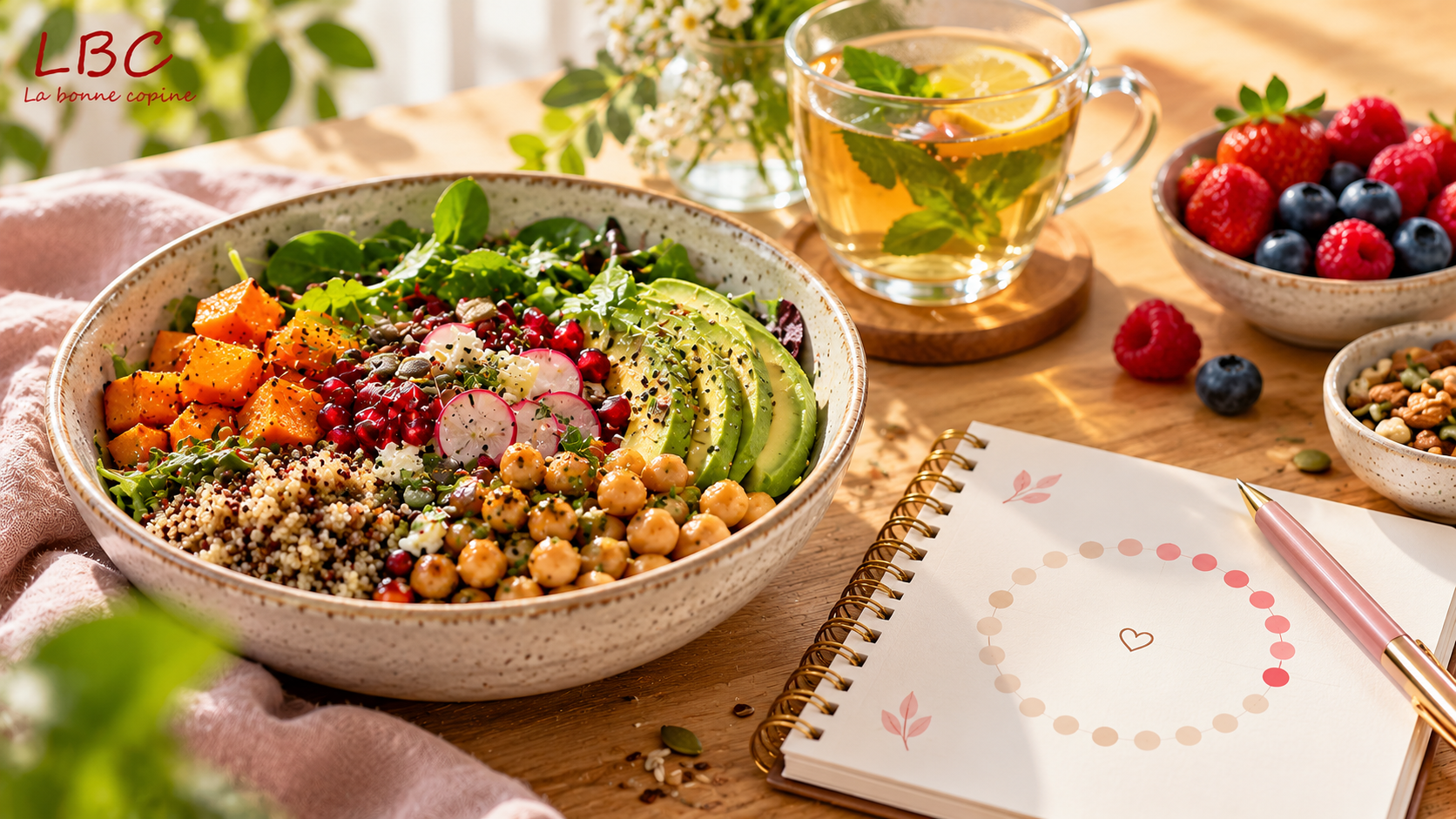
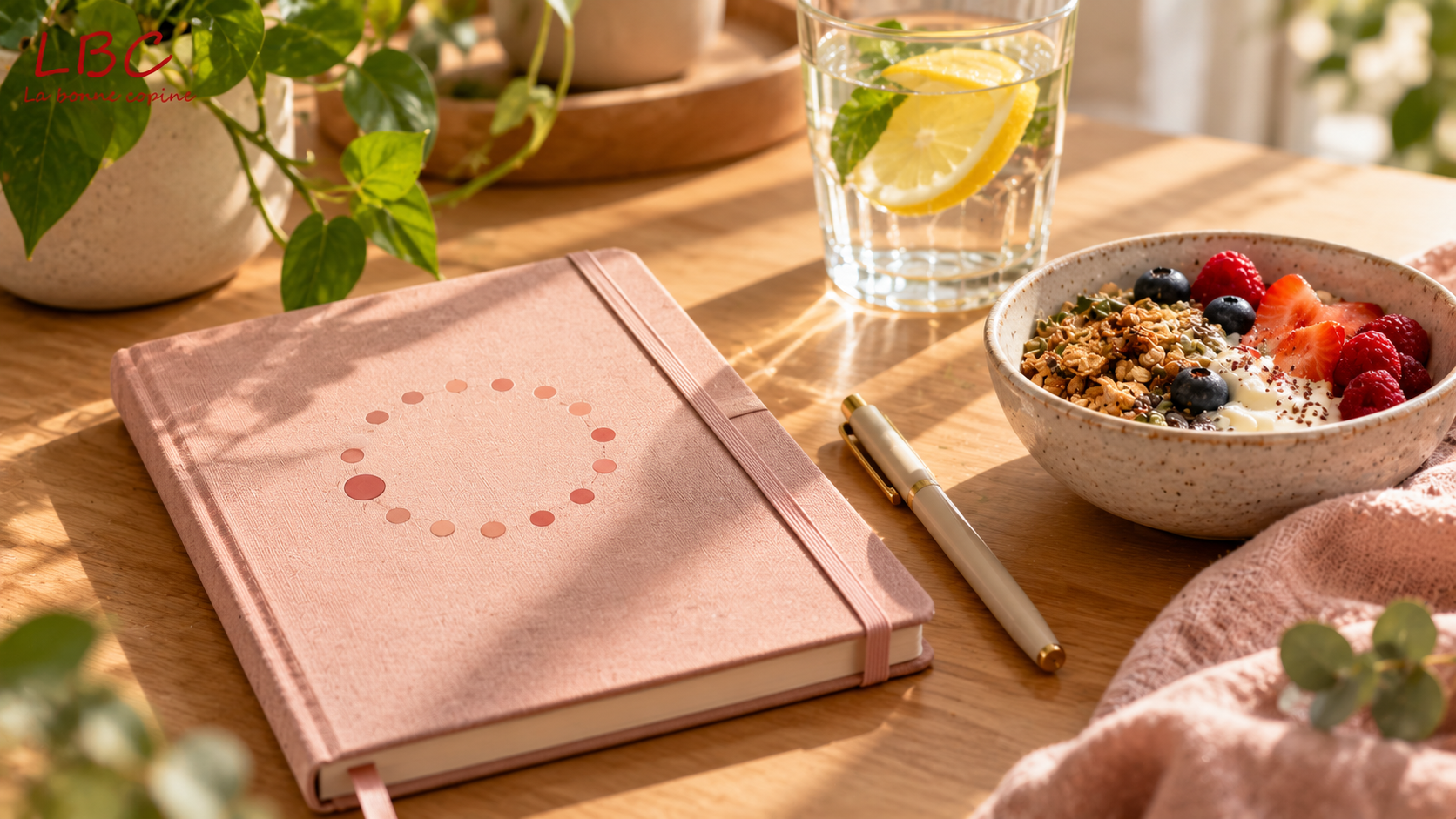
For one cycle, note your energy and appetite each day on a scale from 1 to 5. You may notice personal patterns that are more useful than a general rule applied to everyone.
After your period and around the middle of the cycle
Many people feel more energetic after their period, but this is not a rule. Your experience may vary from one woman to another, and from one cycle to the next.
When thinking about food and the menstrual cycle, use this time to vary your meals: fruit, vegetables, whole grains and protein can all find their place naturally. There is no magic food, but complete, regular meals can help you get through the day without a major energy dip.
For more everyday energy ideas, discover our guide on how to boost your energy naturally.
Before your period: cravings and discomfort
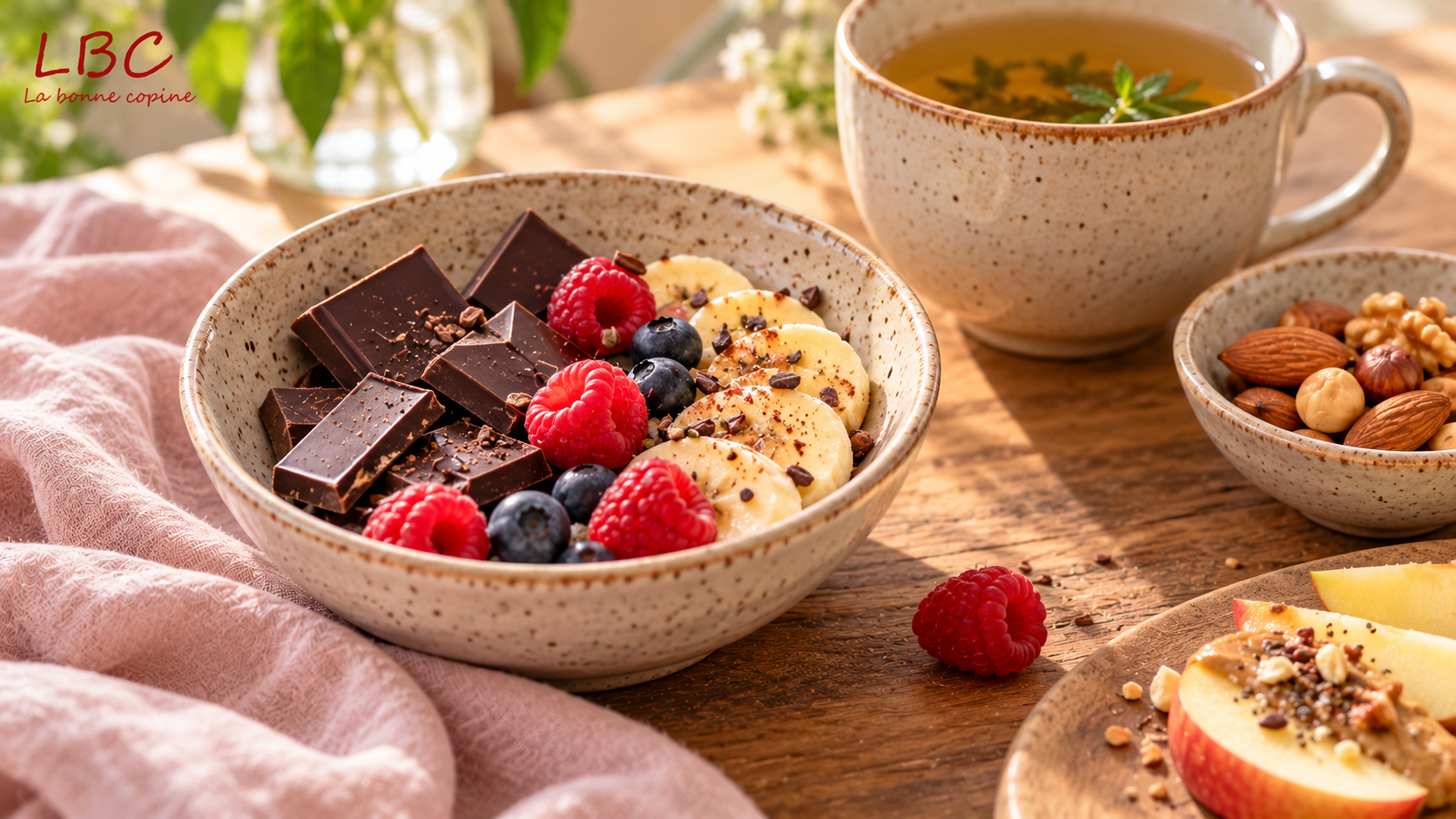
Cravings for sweet or fatty foods before your period are common. You do not need to punish yourself: strict restriction can make cravings feel stronger.
Keep simple snacks within reach, such as fruit, yoghurt or a handful of almonds. Eat regularly, and if possible limit excess caffeine and alcohol, which may worsen irritability or sleep problems.
Promises to avoid
- Diets claiming to “balance your hormones” through a fixed list of foods.
- Severe restrictions, which may disrupt your relationship with food and your cycle.
- Supplements taken without professional advice.
Speak to a doctor if your periods are very painful, unusually heavy or irregular, or if you feel exhausted. These symptoms deserve proper assessment. This article is for information only and does not replace medical advice.
Frequently asked questions
Do I need to eat differently during every phase? Not necessarily. For most people, a varied and regular diet is a sufficient foundation.
Does sugar make symptoms worse? Evidence is limited. Observing your own reactions is more useful than following a general rule.
Quick quiz: food and the menstrual cycle
Test what you have learned. Choose True or False for each statement.