Beyond the fuzz: when hair removal mirrors our society

Summer is approaching, and with it comes the prickly question of hair removal. Let us be clear from the outset: body hair is not your enemy—unless you are a professional cyclist seeking aerodynamic gains or a competitive swimmer chasing a millisecond of speed. Yet, for the rest of humanity, and particularly for women, the return of the sun often signals the end of “hairy freedom”.
In a society in constant flux, hair removal is no longer a simple gesture of hygiene or vanity; it has become a social marker, an identity issue, and, occasionally, a field of political resistance. Between ancient heritage and modern injunctions, let us delve into the roots of this practice that reveals so much about our relationship with the body.
A historical perspective: the millennial quest for smoothness
Contrary to popular belief, the “hunt for hair” does not date back to the invention of modern marketing or 1950s fashion magazines. It plunges its roots into the most ancient millennia.
The roots of Antiquity
Since Ancient Egypt, hairless skin was established as a canon of beauty, but also as a symbol of purity and social distinction. Egyptian women were already using Halawat, an Oriental wax made from sugar, lemon, and honey, to eradicate the slightest trace of hair. In Rome, the absence of hair was a sign of civilisation in contrast to the “barbarity” of hairy and unshaven peoples.
The evolution of targeted zones
In the Middle Ages, the obsession shifted: women plucked their hairlines to enlarge the forehead and thinned their eyebrows to purify the gaze. It was not until the 20th century, with the shortening of skirts in the 1920s and the appearance of the bikini, that the removal of leg and underarm hair became a mass norm. What was once the exclusive preserve of high society became, in a few decades, a universal language.
The sociology of hair removal: between democratisation and dictate
The sociological evolution of hair removal reflects profound changes in the status of women. Formerly, removing hair required time and resources, thus marking membership in the elite. Today, the practice has been democratised, but this accessibility has transformed a luxury choice into an invisible social obligation.
The sun as a ruthless mirror
With the arrival of warmer days, the body prepares to unveil itself. Light clothing becomes a second skin that reveals what winter modestly concealed. This seasonal transition acts as a magnifying mirror. The raw luminosity of the British summer highlights every imperfection and every patch of fuzz, creating a form of anxiety linked to aesthetic performance.
The diversity of reactions
In the face of this injunction, reactions vary considerably from one woman to another:
- Adherence to norms: For some, smooth skin is a sine qua non for feeling radiant and self-assured.
- Emotional adaptation: Many go through a period of transition, oscillating between a desire for comfort and a fear of judgment.
- Resistance: A growing movement claims the right to remain natural, refusing to see hair as a symbol of neglect.
The weapons of beauty: a therapeutic or coercive arsenal?
The ritual of hair removal is a moment where every woman chooses her “weapon”. This choice is not trivial; it reflects our relationship with pain, time, and technology.
| Method | Characteristics | Psychological dimension |
| The razor | Fast, painless, but fleeting. | The tool of urgency, providing immediate but often frustrating results. |
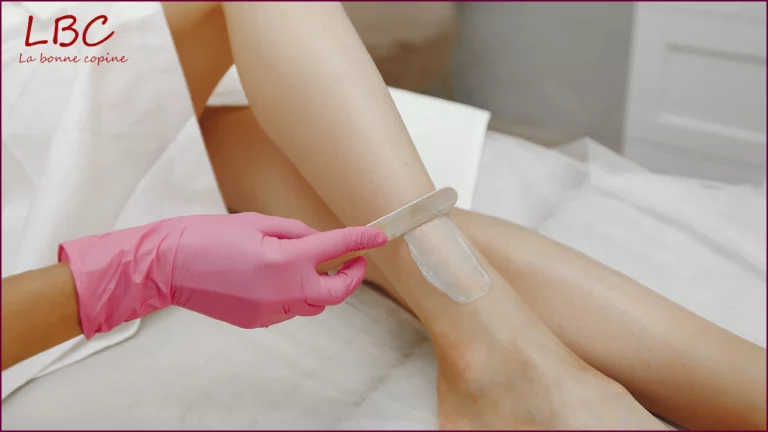
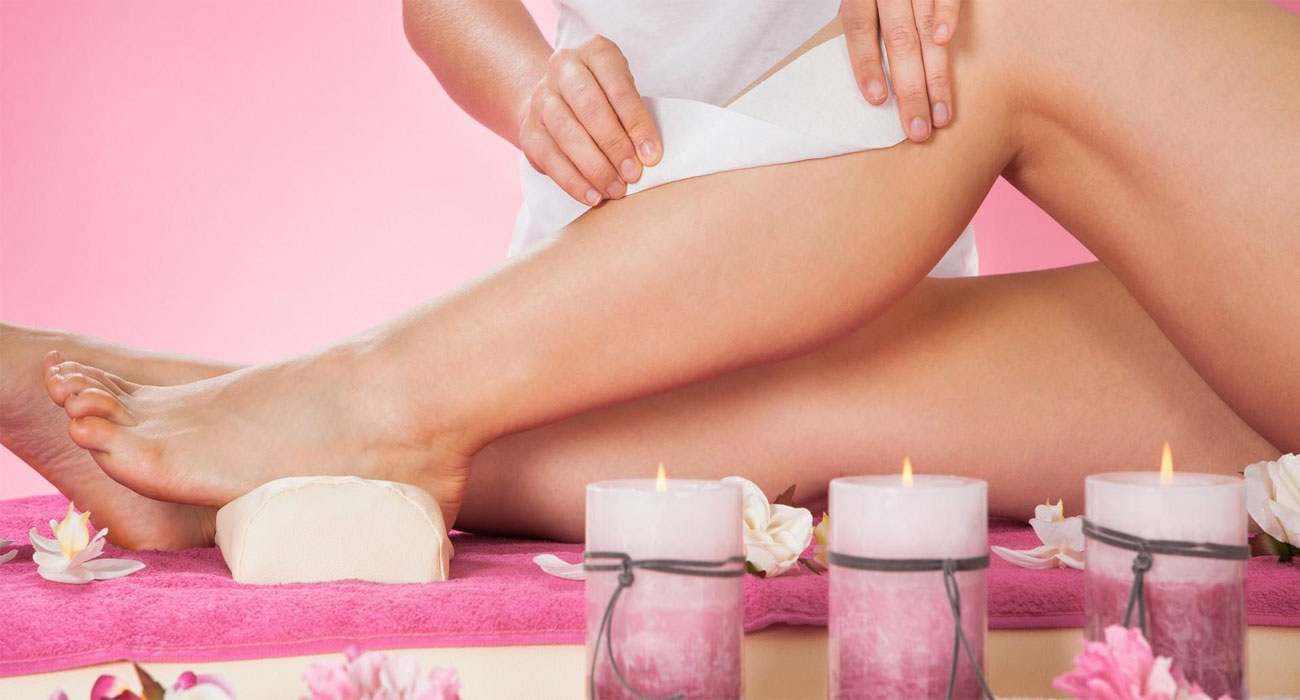
| Hot wax | Effective, durable, but painful. | A form of ritual endurance for prolonged peace of mind. |
| Halawat | Traditional, natural, gentle. | A return to roots; a treatment that respects both the skin and history. |
| Electric epilator | Technological, practical at home. | Total autonomy; a technical management of one’s image. |
| Depilatory cream | Chemical, ostensibly painless. | The promise of magic; avoiding direct confrontation with the hair. |
Beyond the instrument, the objective remains the same: to track down the hair to face the gaze of others. But at what psychological cost? Many women experience a latent guilt when they are not “bikini-ready”, as if their personal value were indexed to the smoothness of their legs.
Toward liberated beauty: self-acceptance as the new horizon
Taking care of oneself should never be an injunction, but a path toward fulfilment. In the age of body positivity and empowerment, hair removal is undergoing a conceptual revolution.
A personal ritual of well-being
High Street beauty centres flourish and promise a metamorphosis. Yet, the true transformation is internal. Enhancing one’s appearance must be a ritual of confidence and not a sacrifice on the altar of the norm. Removing hair must once again become a choice: the choice to feel good in one’s skin, to reconnect with one’s body through care, and not through constraint.
Reclaiming the right to hair
Embracing one’s corporal identity, with or without hair, is a strong stance. By daring to reveal a natural body, women participate in evolving mentalities. Pilosity is no longer a fatality to be gotten rid of at all costs, but a natural attribute that one decides—or not—to modify.
The essential takeaway for this summer:
Beauty on holiday means, above all, freedom. The freedom to show oneself, to enjoy moments of relaxation without letting a few days of regrowth spoil a sunset. The most beautiful tan remains that of self-confidence.
Humorous couplet: the adventures of the salon
Inspired by the spirit of Antonia de Rendinger, here is a nod to those moments of solitude we have all known behind the curtains of a treatment room.
In the rush for a date, “mystic” and grand,
I found myself at the salon, wax strip in hand.
A “Brazilian” request—total deforestation,
To swim in deep waters? A bold sensation.
In the “frog position,” paper knickers on tight,
The male therapist? I sent him out of my sight!
From tailbone to thighs, she didn’t miss a trace,
A garden centre couldn’t keep up with this pace!
The trowel applies the goop, I look away in a daze,
Is it Hitler or Mao left in this waxy haze?
Flashed by the heat, the red bumps start to bloom,
Tonight, in the bedroom… it’s a recipe for doom!
My next step for you
Would you like me to develop a detailed comparative guide on permanent hair removal methods available in the UK (such as laser vs. IPL) to complement this sociological analysis?